Part of the Marketing Attribution Guide
Marketing Attribution: Models, Measurement & Revenue Impact →How to Build a Marketing Attribution Report Your CFO Will Believe

Most attribution reports fail with CFOs because they answer marketing questions instead of finance questions. Here is how to build a report that earns trust and changes how leadership views marketing budgets.
Most marketing attribution reports fail with CFOs before the second slide. Not because the data is wrong, but because the report is built to answer marketing questions rather than finance questions. CFOs are not asking whether your email nurture sequence contributed to conversions. They are asking whether marketing is a reliable source of revenue and whether you can prove it.
These are different questions, and they require a different kind of report. Building an attribution report that survives a CFO conversation requires understanding what finance actually needs from your data, what makes attribution analysis credible to someone trained to find holes in financial models, and how to present uncertainty honestly without undermining confidence in the conclusions.
What CFOs Actually Want to Know
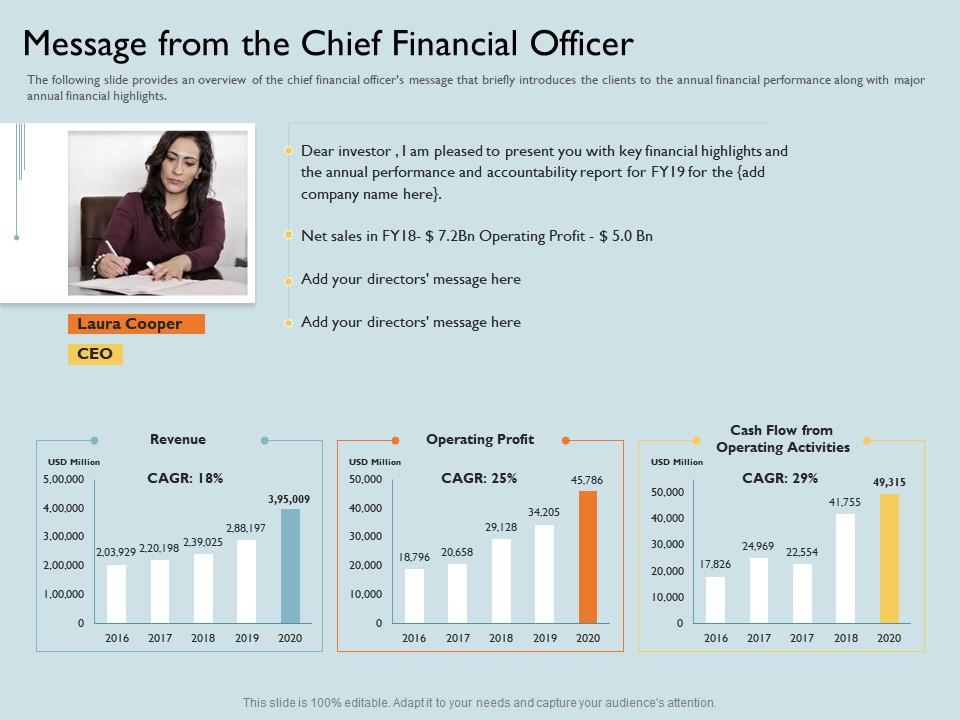
CFOs approach marketing data with a specific set of concerns shaped by their role. They are accountable for capital allocation across the business. When marketing asks for budget, the CFO needs to answer: what do we get back for this investment, how confident are we in that return, and what happens if we spend less or more?
The three questions that matter most in a CFO-facing attribution report are straightforward. First, what revenue did marketing generate? Not leads, not MQLs, not website traffic, but revenue, or at minimum pipeline with a reliable close rate applied. Second, what did it cost to generate that revenue? Total marketing spend divided by attributed revenue, compared to other investment options the company has. Third, how much of that attribution is real versus claimed? CFOs understand that marketing attribution involves modeling assumptions. They want to know how conservative your claims are.
If your attribution report does not answer these three questions directly, a CFO will probe for them, and the conversation will drift away from what you prepared and toward the gaps in your framework.
The Wrong Way to Present Attribution Data
The most common mistake is presenting attribution data as fact rather than estimation. Saying "email drove 42 deals last quarter" implies precision that attribution models cannot deliver. A CFO who understands modeling will immediately ask what assumptions that number rests on, what the confidence interval is, and what the number would be under a more conservative model.
If you do not have good answers to those questions, you have damaged your credibility before the real conversation begins. The instinct to present attribution numbers with false precision comes from wanting to sound confident, but it has the opposite effect on analytically sophisticated audiences.
The second common mistake is leading with channel-level attribution before establishing the top-line story. Spending five minutes on which channels contributed what percentage of conversions before answering how much revenue marketing generated and at what cost will lose a CFO's attention. They need the headline first.
The third mistake is presenting attribution in isolation from business outcomes. A 30% increase in marketing-attributed pipeline means nothing if the business missed its revenue targets. Attribution data needs to connect to business results to be meaningful in a financial context.
The Structure of an Attribution Report That Works
A CFO-ready attribution report follows the logic of a financial analysis, not a marketing dashboard. It starts with outcomes, works backward to causes, and ends with actionable recommendations with projected returns.
Section 1: The Revenue Headline
Open with the number that matters most: marketing-sourced revenue for the period, with a clear definition of how sourced is defined. Is this closed revenue where marketing touched the account before the deal was created? Is it pipeline revenue with a projected close rate applied? Be explicit about the definition and consistent about using the same one every period.
Show this number alongside total marketing spend to produce a simple marketing ROI figure. Even if the calculation is rough, having a single return number at the top of the report gives finance a headline they can hold onto while you explain the supporting detail.
Section 2: Attribution Assumptions and Confidence
This is the section that most marketing reports omit, and it is the one that builds the most credibility with financial audiences. Explain what attribution model you are using and why. Acknowledge what the model cannot measure. If you know your dark social and offline channels are undercounted, say so explicitly and give an estimate of how large that undercount might be.
Presenting your attribution data with explicit uncertainty is not a weakness. It signals that you understand the limitations of the analysis and are not trying to game the numbers. CFOs respect analysts who define the boundaries of their claims. It makes the claims within those boundaries more credible.
Your board-level attribution reporting framework should document these assumptions formally so they are consistent across quarters and can be audited if needed.
Section 3: Channel-Level Performance

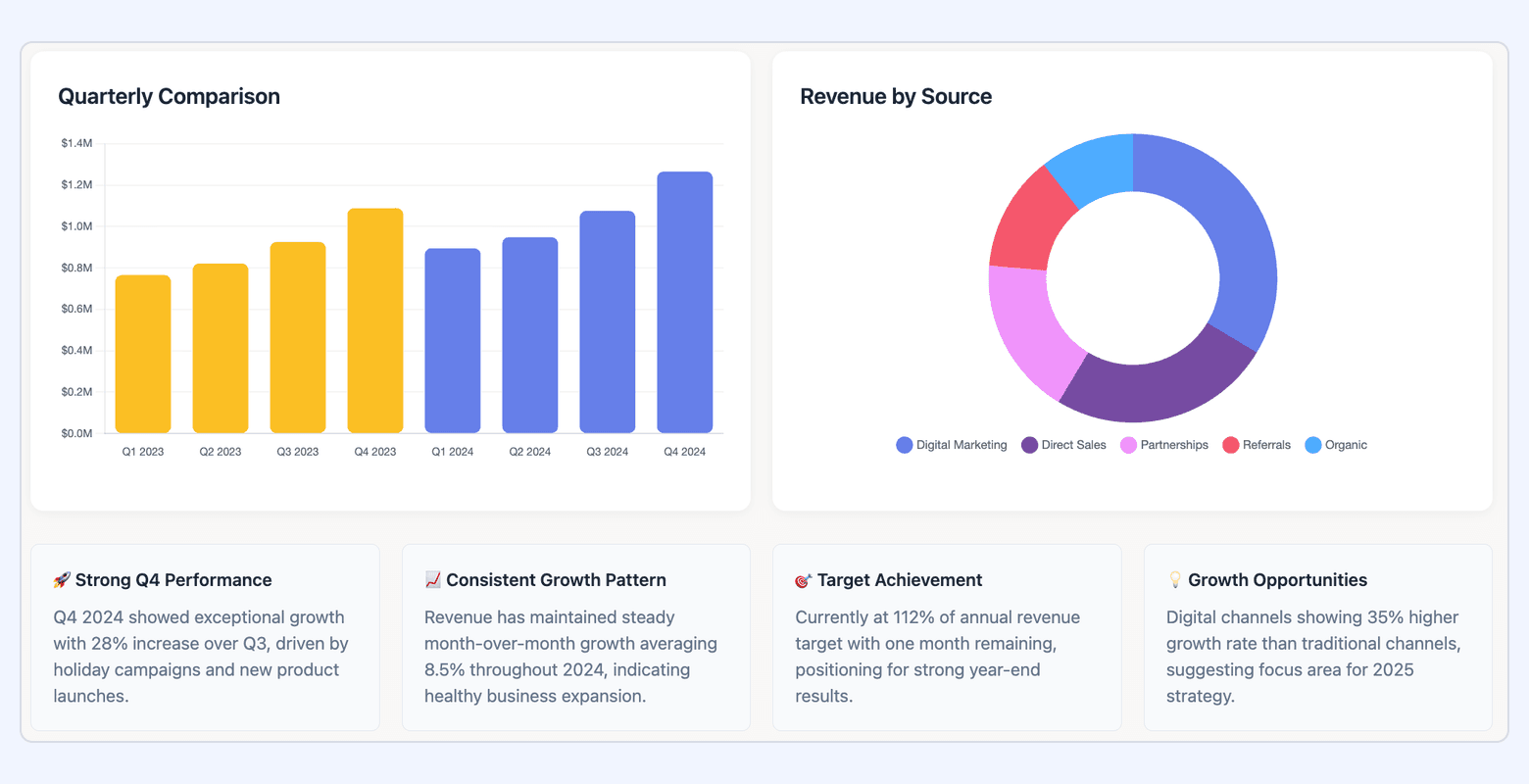
Once you have established the top-line story and the modeling context, channel-level data becomes useful. Present channels in order of marketing-sourced revenue contribution, not in order of volume metrics like clicks or impressions. Show spend alongside contribution so the efficiency is immediately visible.
For each channel, include the trend over time, not just the current period snapshot. A channel that generated 20% less revenue than last quarter but at 30% lower cost is a different story from one that generated 20% less revenue at the same cost. Trend data shows whether channels are improving or declining in efficiency.
Section 4: The Investment Case
End with a recommendation that looks like a capital allocation proposal. Given what you have shown about channel efficiency, what should change about next quarter's budget, and what return do you project from that change? If you are asking for more budget in a specific channel, show the historical ROI on that channel and the projected return on the incremental investment.
This framing positions marketing as an investment decision rather than a cost center, which is the mental model you want the CFO to use when evaluating your budget requests.
Handling the Prove It Question
At some point in any serious attribution conversation, a CFO will ask some version of: how do we know marketing actually caused those deals rather than just being present? This is a fair question, and it is one that most attribution frameworks cannot fully answer.
The honest answer has two parts. First, attribution is a model of contribution, not a proof of causation. It tells you which channels touched buyers before they converted, weighted by the model's assumptions. It does not prove that any specific channel caused the conversion. Second, the way to get closer to causal proof is through incrementality testing, which compares outcomes in groups that received marketing against groups that did not.
If you have run any incrementality tests, lead with those results when the prove-it question comes up. Incrementality data is the most credible form of marketing proof with a financial audience because it uses the experimental logic that finance trusts. Even small holdout tests on one or two channels give you something concrete to point to.
If you have not run incrementality tests, acknowledge that directly and position it as a planned improvement to your measurement approach. Coming in with a plan to test causal claims is more credible than being caught flat-footed when the question comes up.
The Role of Dedicated Attribution Tools in Finance-Ready Reporting
Building the kind of attribution report described here is difficult with spreadsheets and basic analytics platforms. The data needs to come from multiple sources, the model assumptions need to be applied consistently, and the reporting needs to be repeatable quarter over quarter without starting from scratch each time.
Dedicated marketing attribution software handles the data infrastructure that makes this kind of reporting possible at scale. It connects your CRM, ad platforms, and analytics tools, applies consistent attribution models across all sources, and produces reports that can be regenerated with updated data in minutes rather than days.
For teams doing monthly or quarterly finance reviews, the time savings alone often justify the cost. But the bigger return is consistency: when your attribution methodology is codified in a tool rather than rebuilt manually each period, your numbers are comparable across quarters and your methodology is auditable. That auditability is what turns attribution from a marketing talking point into a financial planning input that the CFO actually uses.
Building Trust Over Time
A single good attribution report will not transform how finance views marketing. Trust with a CFO is built over quarters by being consistent, transparent about limitations, and right more often than wrong in your projections.
The teams that succeed at this set up a regular cadence, typically monthly or quarterly, and stick to exactly the same framework each period. They track their projections against actual outcomes and report honestly when they miss. They update their attribution assumptions when they find evidence that the model is miscalibrated.
Over time, this consistency builds a track record. A CFO who has seen eight quarters of attribution reports that were honest about uncertainty and reasonably accurate in their projections is a CFO who trusts the marketing team's numbers. That trust is worth more than any individual report, because it changes how the CFO engages with budget conversations. Instead of starting from skepticism, they start from a baseline of confidence and ask forward-looking questions about where to allocate capital for growth.
That is the real outcome of building attribution reporting your CFO will believe. Not a single persuasive presentation, but a relationship where finance and marketing are working from the same data and the same framework to make better decisions together. Our attribution platform is built around exactly this kind of consistent, auditable reporting so your numbers hold up quarter after quarter.
Key Takeaways
- CFOs need revenue data, not just marketing metrics.
- Present attribution data as estimates, not facts.
- Start reports with revenue headlines, not channel details.
- Connect attribution data to overall business outcomes.
Frequently Asked Questions
- What do CFOs want from marketing attribution reports?
- CFOs want to know how much revenue marketing generated, the cost of that revenue, and the reliability of attribution claims.
- Why is it a mistake to present attribution data as fact?
- Presenting data as fact implies precision that attribution models cannot provide, damaging credibility with CFOs.
- How should an attribution report be structured?
- An effective report should start with revenue outcomes, explain attribution assumptions, and provide actionable recommendations.
- What is the importance of connecting attribution data to business outcomes?
- Attribution data must relate to business results to be meaningful, as isolated data lacks context and relevance.
See Where Your Business Stands in Search
Get a free site audit. We identify what is holding you back and what to fix first.
Related Resources
Explore more insights to enhance your digital marketing strategy
Revenue Attribution Platform
Connect every marketing dollar to closed revenue. Multi-touch attribution, incrementality testing, and board-ready reporting in one place.
Revenue Attribution: Models, Measurement & Revenue
Every attribution model explained — from first-touch to data-driven — with a framework for choosing the right one for your pipeline.
See It Run on Your Pipeline
Book a demo and see the unified measurement framework applied to your own revenue data. No slide decks — just your numbers.