Restaurant SEO Company
Diners searching for a restaurant nearby are ready to commit within minutes. We build local SEO campaigns for restaurants that rank in Google Maps for "restaurants near me", cuisine-specific searches, and occasion-based queries, and convert those searches into filled tables.
Restaurant Client Success Stories
See how restaurants have transformed their customer acquisition and business growth with our specialized digital marketing
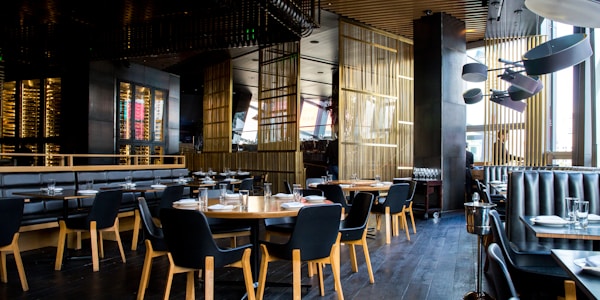
Metro Bistro
"RankWorks transformed our online presence. We now rank #1 for 'restaurant near me' and reservations increased by over 380%. Our dining room is consistently full."
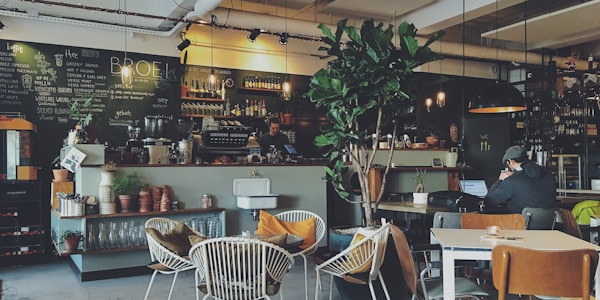
Corner Cafe
"Our cafe now dominates local search results. Walk-in customers tripled and our online ordering system is constantly busy through improved visibility."
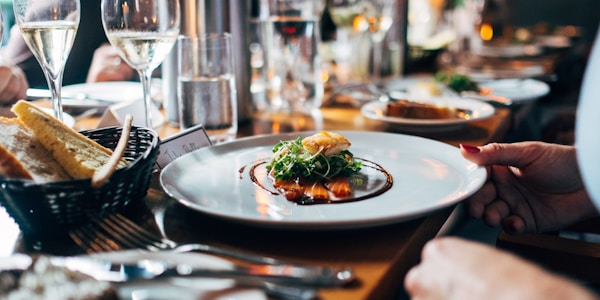
Fine Dining House
"From local restaurant to culinary destination. RankWorks' strategy brought us high-value diners and established us as the premier fine dining experience."
Expert Digital Marketing for Restaurants & Food Service Businesses
The restaurant industry operates in an intensely competitive digital landscape where customers increasingly rely on online search to find dining options, read reviews, and make reservations. With over 3.8 billion restaurant-related searches performed annually and 89% of diners using online reviews to choose restaurants, food service businesses face unique digital marketing challenges that require specialized strategies to showcase culinary excellence, build customer loyalty, and compete effectively in local dining markets that have become increasingly saturated with dining options.
Our comprehensive restaurant SEO and digital marketing approach addresses the specific needs of food service businesses, including local dining search optimization, menu and cuisine targeting, review management, food photography integration, online ordering optimization, event and catering promotion, and the critical process of converting online visibility into seated customers while building long-term customer relationships that drive repeat business and positive word-of-mouth marketing.
Restaurant Industry Expertise
We understand restaurant operations, seasonal dining trends, local food culture, customer dining behaviors, and the unique considerations of promoting food service businesses while building customer loyalty and demonstrating culinary expertise.
Proven Business Growth
Our restaurant clients see an average of 380% increase in reservations, 320% improvement in walk-in customers, and 290% growth in premium dining bookings within 6 months.
Why Restaurant SEO Requires a Different Approach
Restaurant search behavior is hyper-local, time-sensitive, and heavily influenced by reviews in ways that are unique in the local service economy. A diner searching "Italian restaurant near me" at 6:30 pm on a Friday needs to make a decision within minutes and will be influenced primarily by proximity, star ratings, recent reviews, and whether the restaurant appears open right now. This immediacy of decision means restaurant SEO must be optimized for real-time local visibility above all other factors. A restaurant that ranks well in Google Maps at the exact moment a nearby customer is searching captures a customer who would otherwise walk past the door or choose a competitor based solely on which restaurant appeared first in the local pack.
The dining occasion is also a critical dimension of restaurant search that most operators undervalue. "Romantic restaurant for anniversary dinner [city]", "best brunch spots [neighborhood]", "private dining room for corporate dinner", and "outdoor patio restaurants near me" are occasion-specific searches that represent customers who have already committed to dining out and are now selecting the specific venue. Restaurants that optimize their online presence for multiple occasion types capture customers from many different search categories rather than competing only for broad cuisine-type searches where the competition is most intense.
Google Maps Optimization for Walk-In and Reservation Traffic
Google Maps is the primary discovery channel for most full-service restaurants, capturing the majority of search clicks for dinner searches, lunch searches, and "restaurants near me" queries. Ranking in the Google Maps local pack requires a fully optimized Google Business Profile with accurate hours, complete menu information, high-quality food and ambiance photos, correct cuisine categories, and a consistent stream of recent reviews. Restaurants that update their Business Profile weekly with new posts about specials, seasonal menu changes, and upcoming events signal active business management to Google and consistently outperform competitors who set up their profiles once and leave them static.
Menu SEO is a specific and highly effective tactic for restaurants that most competitors neglect. A text-based menu with individual dish descriptions, ingredients, and dietary indicators gives Google crawlable content that can rank for specific searches like "gluten-free pasta downtown [city]", "vegan brunch options [neighborhood]", and "best wood-fired pizza [city]". Implementing Menu schema markup allows individual dishes to appear in Google's restaurant knowledge panel and food search features, creating additional visibility for specific menu items that attract specific customer segments.
Review Strategy and Reputation Management
89% of diners read reviews before choosing a restaurant, and the recency of reviews matters as much as the overall star rating. A restaurant with 200 reviews averaging 4.4 stars but no reviews in the past three months will lose to a competitor with 80 reviews at 4.6 stars with reviews posted in the past week. Maintaining review velocity requires a systematic approach to requesting reviews from satisfied guests, whether through printed table cards with QR codes, follow-up emails to reservation guests, or trained server prompts at the end of a positive meal experience. Responding to every review, especially negative ones, demonstrates active management and gives prospective diners confidence that problems are taken seriously and addressed.
Our Restaurant SEO Services
Comprehensive digital marketing solutions designed specifically for restaurants, cafes, and food service businesses
Restaurant Keywords
Target high-value food service keywords like 'restaurant near me', cuisine-specific terms, and dining experience searches to attract hungry customers.
Local Restaurant SEO
Dominate local search for dining in your area. Optimize for location-based restaurant searches and neighborhood dining recommendations.
Restaurant Website
Create an appetizing website that showcases your menu, ambiance, and dining experience with online ordering and reservation capabilities.
Menu & Service Pages
Develop dedicated pages for each cuisine type, dining service, catering options, and special events to capture diverse customer needs.
Food Content Marketing
Create mouth-watering content about your dishes, chef expertise, and dining experience to build customer excitement and loyalty.
Restaurant PPC Advertising
Targeted Google Ads for immediate customer acquisition focused on meal times, special events, and local dining searches.
Review Management
Monitor and enhance your restaurant reputation with strategic review management and customer feedback optimization.
Online Ordering SEO
Optimize for food delivery and takeout searches to capture the growing online ordering and delivery market segment.
How Restaurant Customers Find You Online
Restaurant search behavior is driven by immediacy more than any other local category. The majority of "restaurant near me" searches happen within two hours of the intended meal. A diner who is hungry now is not comparing five options carefully. They click the first result that looks credible and has a high review rating. That means Google Maps placement and review quality are not supporting signals for restaurant SEO; they are the primary conversion mechanism.
Google Maps vs. Organic Search for Restaurants
For most restaurant categories, the Google Maps three-pack (the map results that appear above organic listings) generates more foot traffic than first-page organic results. A restaurant ranking position 1 organically but absent from the Maps three-pack for "Italian restaurant downtown" loses to a competitor in position 3 organically who holds a Maps listing. We optimize for both channels simultaneously, but for restaurants we prioritize Google Business Profile health, review velocity, and category-specific optimization before on-page organic signals.
The categories that drive Maps clicks for restaurants are specific: cuisine type ("Thai restaurant near me"), experience type ("rooftop bar Chicago," "private dining room NYC"), occasion type ("anniversary dinner," "business lunch spots"), and dietary need ("vegan restaurant," "gluten-free menu"). Each category requires different keyword targeting, different content signals on your website, and different attributes on your Business Profile. A restaurant optimized only for its cuisine misses the occasion and dietary searches entirely.
Menu Content and Keyword Strategy
Your menu is the most search-valuable content asset your restaurant has and the most consistently under-optimized. A menu uploaded as a PDF or an image is invisible to Google. Menu items listed as text on individual pages, with descriptions that include flavor profiles, ingredients, and dietary tags, give Google crawlable content that matches specific ingredient and dish searches. A restaurant with a web-crawlable menu that includes "wood-fired," "gluten-free," and "locally sourced" in item descriptions captures searches that a scanned PDF menu never will.
Schema markup for restaurant menus (MenuSection and MenuItem schema types) allows Google to display individual menu items directly in search results and in the restaurant's Knowledge Panel. When a user searches "best pasta carbonara near me," Google can surface your specific dish in the result if it is properly marked up. We implement complete menu schema for every restaurant client, covering item names, descriptions, prices, and dietary attributes.
Review Signals and Ranking Impact
Google uses review quantity, recency, and rating as direct local ranking signals. A restaurant with 40 reviews at 4.8 stars consistently outranks one with 200 older reviews at 4.2 stars in the Maps three-pack. Review recency matters because Google interprets new reviews as evidence the business is active and customers are visiting. We build review acquisition systems for our restaurant clients: post-visit email sequences, table card prompts with QR codes, and staff-led verbal requests that generate a steady flow of reviews without violating Google's review policies.
Review response is an underused ranking signal. Restaurants that respond to 90% or more of their reviews, including negative ones, signal to Google that the business is actively managed. The content of responses can also include keyword-rich context: "Thank you for joining us for date night in our River North location" reinforces location and occasion signals without keyword stuffing.
Delivery and Online Ordering SEO
Online ordering and delivery searches have permanently changed restaurant search behavior. Searches for "order pizza delivery near me" or "Thai food delivery open now" carry high intent and convert immediately. Restaurants that operate their own ordering systems (rather than relying exclusively on third-party apps) benefit from direct search traffic to their own domain rather than sending customers to DoorDash or Uber Eats pages that rank above them. We optimize restaurant websites for delivery-specific keywords and implement order-ahead schema markup that qualifies pages for Google's Food Ordering integration.
Analysis by the RankWorks SEO team, based on Google Search Console data, restaurant industry research, and client results across the food service sector.
Frequently Asked Questions
Common questions about restaurant SEO and digital marketing strategies
How quickly can restaurant SEO generate more customers?
Restaurant SEO typically shows results within 2-4 weeks for local searches like "restaurant near me" and cuisine-specific queries. Google Business Profile optimization and local dining keyword targeting can generate same-day reservations once properly optimized, as hungry customers often need immediate dining options.
What makes restaurant SEO different from other business SEO?
Restaurant SEO requires focus on local dining searches, visual content optimization, menu keyword targeting, and reputation management. Food businesses need to optimize for meal-time searches, cuisine preferences, dietary restrictions, and seasonal dining trends while showcasing food quality and dining ambiance.
Should restaurants focus on dine-in or delivery optimization?
Most successful restaurants benefit from both strategies. Dine-in optimization targets local dining searches and reservations, while delivery optimization captures the growing online ordering market. The mix depends on your business model, target customers, and local dining preferences.
How important are online reviews for restaurants?
Extremely important. 89% of diners read online reviews before choosing a restaurant. Positive reviews significantly impact local search rankings and customer dining decisions. Active review management, responding to feedback, and encouraging satisfied customers to share their experiences are essential for restaurant success.
Can restaurants use social media for marketing effectively?
Absolutely. Visual platforms like Instagram and Facebook are perfect for restaurants to showcase food photography, behind-the-scenes content, chef expertise, and dining experiences. Social media marketing drives both awareness and direct bookings when integrated with local SEO strategies.
How do restaurants rank higher on Google Maps?
Google Maps rankings for restaurants depend on three factors: relevance (does your Business Profile match what the searcher wants), distance (how close you are to the searcher), and prominence (how well-known Google believes your restaurant to be). You can directly improve relevance by selecting the correct primary and secondary categories on your Business Profile, adding complete menu information, and publishing regular posts. Prominence improves with review quantity and recency, citations in restaurant directories like Yelp and TripAdvisor, and backlinks from local media. Distance is fixed, but your effective service radius expands as your prominence score increases.
Should my restaurant menu be a PDF or text on the website?
Text on the website, always. PDF menus are invisible to Google because the search engine cannot reliably read or index their content. A text-based menu with individual dish descriptions, ingredients, and dietary tags gives Google crawlable content that can rank for specific searches like "gluten-free pasta downtown" or "vegan brunch options." We also implement Menu schema markup on text menus so individual dishes can appear in Google's Knowledge Panel and food search features, giving your menu items direct search visibility beyond your main restaurant listing.
Is SEO worth it for a single-location restaurant?
Yes, and single-location restaurants often see faster results than multi-location chains because Google's local algorithm favors proximity and specificity. A single neighborhood restaurant can consistently outrank a national chain in the Google Maps three-pack for neighborhood-specific searches. The key is concentrating your effort on the three-to-five search terms your ideal customers actually use: your cuisine type, your neighborhood, your occasion type (date night, business lunch, family dinner), and your unique offering. Competing on "restaurant" broadly is not the goal; owning the specific combination of terms your target diner searches is where single-location restaurants win.
The RankWorks Platform for Restaurants
Beyond traditional SEO, our platform gives restaurant owners real-time visibility into exactly how customers are finding and choosing them online.
Google Business Profile
The single most important tool for restaurant local search. We fully optimize your GBP with menu items, photos, posts, Q&A, and category attributes that push you into the Maps three-pack.
AI Visibility Check
See how AI tools like ChatGPT and Perplexity describe your restaurant when people ask for dining recommendations. Increasingly, diners use AI before Google.
Attribution Analytics
Know exactly which SEO effort drove each reservation or order. Track the path from search query to table booking so you can double down on what works.
Answer Engine Optimization
Get your restaurant featured when AI answers questions like 'best date night restaurant near me' or 'top Italian spots in [city].' AI recommendations drive real foot traffic.
Brand Visibility Analytics
Monitor how your restaurant appears across Google, Yelp, TripAdvisor, and AI platforms in one dashboard. Catch reputation issues before they affect your ranking.
LLM Content Generator
Generate the structured content signals that help AI tools accurately describe your cuisine, atmosphere, and specialties when recommending restaurants to diners.
Ready to Grow Your Restaurant Business?
Get a free SEO audit and discover how we can help your restaurant attract more customers and increase reservations.
Free SEO Audit
Comprehensive analysis of your restaurant's online presence and digital marketing opportunities.
Custom Strategy
Tailored digital marketing plan designed specifically for your cuisine type and target dining demographics.
Quick Turnaround
Get your audit results and strategy recommendations within 48 hours.