Part of the Marketing Attribution Guide
Marketing Attribution: Models, Measurement & Revenue Impact →Marketing Mix Modeling vs. Attribution Software: Which Does Your Team Actually Need?

Marketing mix modeling and attribution software both claim to measure marketing effectiveness. They measure completely different things. Here is how to pick the right tool for your team.
Marketing mix modeling and attribution software both promise to tell you what is working in your marketing. They measure completely different things, answer different questions, and serve different teams. Using the wrong one for your situation wastes budget and produces conclusions that mislead more than they inform.
This comparison is not about which tool is better in the abstract. It is about which one your team actually needs given your budget, your data volume, your sales cycle, and the decisions you are trying to make. In some cases the answer is one or the other. In others, you need both. Getting this wrong is an expensive mistake.
What Marketing Mix Modeling Is and How It Works
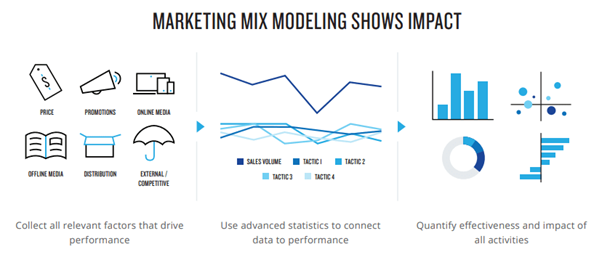
Marketing mix modeling, often called MMM, is a statistical technique that uses historical data to estimate the contribution of different marketing channels to business outcomes. It looks at time-series data, typically weekly or monthly aggregates, and builds a regression model that explains how changes in marketing spend across channels correlate with changes in sales or revenue.
MMM does not track individual buyers. It does not follow a specific person from their first ad impression to their final purchase. Instead, it looks at patterns across large data sets. When TV spend went up by 20% in Q3 and revenue rose by 8%, the model estimates what portion of that revenue lift came from the TV increase versus seasonal effects, competitor activity, pricing changes, and other variables.
This approach has real strengths. It can incorporate channels that are impossible to track digitally, including television, radio, out-of-home advertising, and print. It handles privacy restrictions naturally because it never touches individual-level data. And it can capture effects that play out over months, including brand-building investments that do not show up in short-term conversion data.
The trade-off is that MMM requires a lot of data and a lot of time. Traditional MMM projects take three to six months, cost tens of thousands of dollars, and need at least two to three years of historical data to produce reliable results. More recent lightweight MMM approaches have reduced these barriers, but the fundamental data requirement remains.
What Attribution Software Is and How It Works
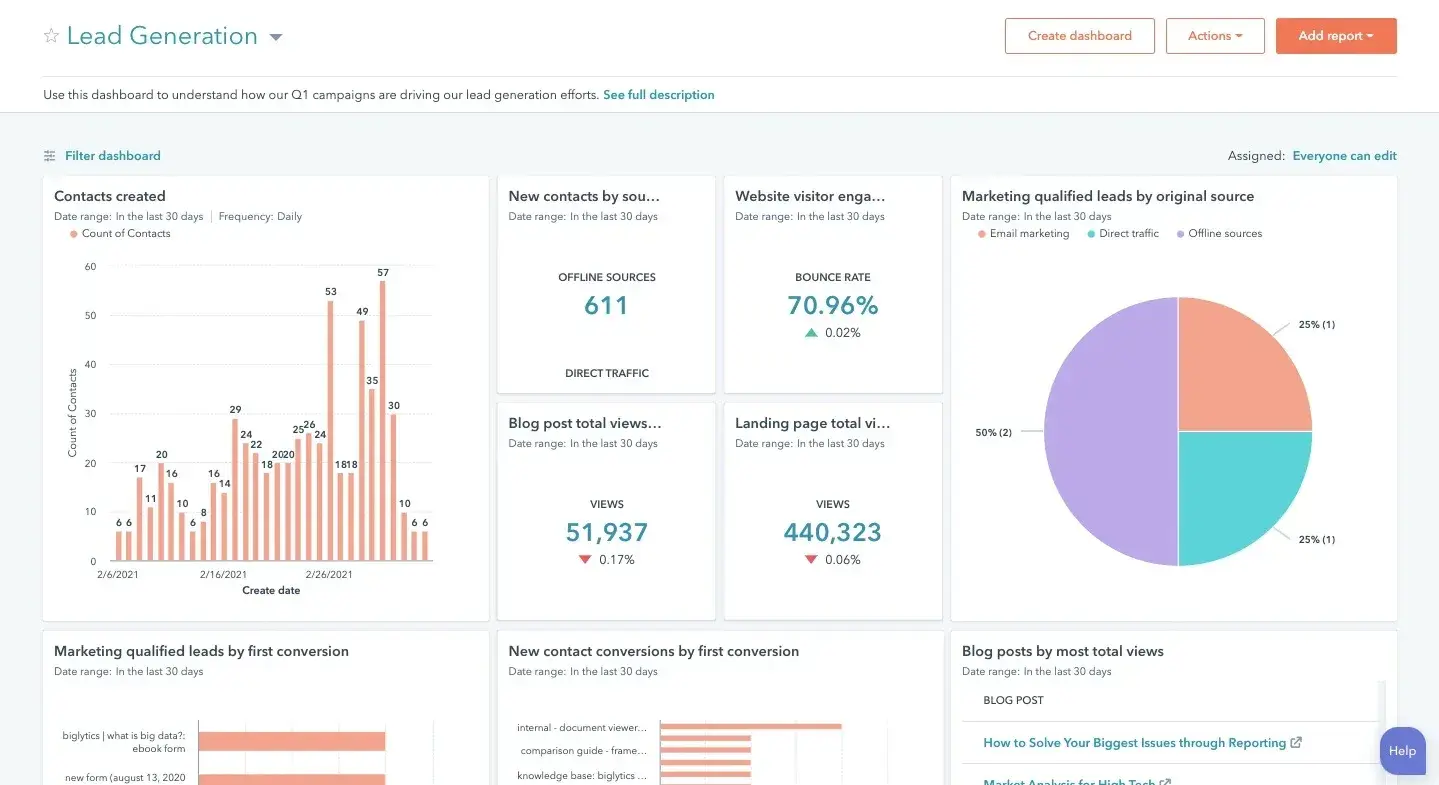
Attribution software tracks individual buyers across their conversion journey and assigns credit to the marketing touchpoints they encountered. It connects clicks, form fills, email opens, ad impressions, and other digital interactions to specific people and then maps those people to conversions.
The core questions attribution software answers are: which channels touched this buyer before they converted, in what order, and how much credit should each touchpoint receive? The model used to answer the last question, whether last-click, linear, time-decay, or data-driven, determines how credit gets distributed across the path.
Attribution software is built for digital channels. It excels at measuring paid search, paid social, email, organic search, display, and other trackable online channels. It works at the individual level, which means it can tell you not just which channels drove conversions in aggregate but which specific campaigns, ad sets, and even individual ads contributed to specific deals.
The limitations are the mirror image of MMM's strengths. Attribution software struggles with channels that cannot be tracked digitally. It is increasingly affected by browser privacy restrictions, cookie blocking, and iOS tracking changes that create gaps in individual conversion paths. And it typically works with short to medium attribution windows, making it less useful for measuring the long-tail brand effects that play out over quarters rather than days.
The Core Difference: Aggregate vs. Individual
The fundamental distinction between MMM and attribution software is the level at which they measure. MMM measures aggregate marketing effects on aggregate outcomes. Attribution software measures individual touchpoints on individual buyers.
This difference determines which questions each tool can answer. MMM is strong at estimating the long-term revenue contribution of brand advertising, comparing the effectiveness of very different channel types including digital and offline, modeling diminishing returns and optimal budget levels, and handling privacy-safe measurement in a world where individual tracking is increasingly restricted.
Attribution software is strong at identifying which specific campaigns are driving conversions, optimizing spend within a channel based on granular performance data, understanding the multi-touch paths that buyers take through digital channels, and connecting marketing activity to specific deals in a CRM.
The post beyond marketing attribution covers how B2B teams are moving from single-model measurement to frameworks that combine attribution data with incrementality testing and MMM. That combined approach is increasingly the standard for mature marketing organizations, but it requires investment that not every team is ready to make.
When MMM Is the Right Tool
Marketing mix modeling is the right primary measurement tool when one or more of the following conditions apply to your team.
You Have Significant Offline Spend
If television, radio, print, out-of-home, or events represent more than 20% of your marketing budget, attribution software will have a significant blind spot in your data. MMM can incorporate these channels in a way that digital attribution cannot. If you are measuring only digital channels, you are optimizing a portion of your budget while flying blind on the rest.
Your Sales Cycle Is Longer Than 90 Days
Attribution software typically works with attribution windows of 30 to 90 days. For B2B companies with enterprise sales cycles that run six months to a year or more, this creates a systematic problem. The early touchpoints that influenced a deal signed today may have occurred well outside the attribution window, making them invisible in the data. MMM, which works with longer time horizons, handles this better.
You Are Trying to Measure Brand-Building Investment
Brand advertising rarely drives immediate conversions. Its value shows up over time as increased awareness, higher recall, better win rates, and lower cost-per-acquisition across performance channels. Attribution software cannot measure these delayed, diffuse effects. MMM can, which makes it the appropriate tool for justifying and sizing brand investment.
Privacy Restrictions Are Causing Significant Data Loss
If you are seeing large portions of your digital traffic attributed to direct or unknown because of cookie restrictions and browser privacy features, your attribution data has systematic gaps. MMM sidesteps this problem entirely by working with aggregate data rather than individual tracking.
When Attribution Software Is the Right Tool
Attribution software is the right primary measurement tool when your marketing is predominantly digital, your sales cycle is measured in days to weeks rather than months, and you need granular campaign-level data to make tactical optimization decisions.
You Need to Optimize Within Channels
MMM can tell you that paid search contributed 25% of revenue last quarter. It cannot tell you which keywords, ad groups, or match types drove that contribution. Attribution software can. If your primary use case is optimizing performance within digital channels, attribution software provides the granularity you need.
You Need CRM-Level Deal Attribution
B2B teams often need to connect marketing touches to specific opportunities and deals in their CRM. Which campaigns touched the contacts on this account before the deal was created? What was the marketing path for the accounts we won versus the ones we lost? Attribution software can answer these questions at the deal level. MMM cannot.
Your Budget and Data Do Not Support MMM Yet
Building a reliable MMM requires significant historical data and analytical investment. Most teams with marketing budgets under $5 million per year do not have enough data volume or channel diversity to make MMM outputs reliable. For those teams, marketing attribution software delivers better insights per dollar spent than attempting a premature MMM project.
When You Need Both

Larger marketing organizations increasingly run both MMM and attribution software in parallel, using each for the questions it answers best. MMM sets strategic budget allocation across channels and validates long-term brand investment. Attribution software handles tactical optimization within channels and CRM-level deal reporting.
This combination is often called the measurement trifecta when it includes incrementality testing as a third layer. Incrementality experiments, typically run as geo-based holdout tests, validate the causal impact of specific channels by comparing performance in test and control regions. This third layer helps reconcile cases where MMM and attribution give conflicting signals about a channel's contribution.
The investment required for a full trifecta approach, including tools, data infrastructure, and analyst time, typically only makes sense at marketing budgets above $10 million per year. Below that threshold, the returns from the added complexity are harder to justify.
Making the Decision for Your Team
Start by mapping the decisions you need attribution data to make. If those decisions are primarily tactical, which campaigns should we run more of this week, attribution software is the right tool. If they are strategic, how should we divide our budget across digital and offline channels next year, MMM is more appropriate.
For most B2B SaaS companies in the $2 million to $20 million marketing budget range, the practical answer is to start with multi-touch attribution as the foundation, make sure your digital tracking is clean and comprehensive, and add MMM when you have enough data history and enough offline spend to make it worthwhile.
The teams that struggle most are those that try to use attribution software to answer strategic budget allocation questions it was not built to answer, or those that invest in MMM before they have the data volume to make the outputs reliable. Matching the tool to the question is the core discipline here, and getting that match right is worth more than having the most sophisticated measurement stack.
If you are not sure where your team falls on this spectrum, the first step is an honest audit of your current measurement gaps. What marketing activity are you doing that you cannot currently measure? What budget decisions are you making without confidence because the data is ambiguous? Those gaps will tell you which measurement investment to prioritize.
Key Takeaways
- Marketing mix modeling and attribution software serve different purposes.
- MMM estimates the impact of marketing channels on business outcomes.
- Attribution software tracks individual buyer interactions and conversions.
- Choosing the right tool depends on your budget, data volume, and sales cycle.
Frequently Asked Questions
- What is marketing mix modeling?
- Marketing mix modeling is a statistical technique that estimates the contribution of different marketing channels to business outcomes using historical data.
- How does attribution software work?
- Attribution software tracks individual buyers across their conversion journey and assigns credit to the marketing touchpoints they encountered.
- What are the main differences between MMM and attribution software?
- MMM measures aggregate marketing effects on overall outcomes, while attribution software focuses on individual touchpoints for specific buyers.
- Which tool should my team use?
- Your team should choose based on your budget, data volume, sales cycle, and the specific decisions you need to make.
See Where Your Business Stands in Search
Get a free site audit. We identify what is holding you back and what to fix first.
Related Resources
Explore more insights to enhance your digital marketing strategy
Revenue Attribution Platform
Connect every marketing dollar to closed revenue. Multi-touch attribution, incrementality testing, and board-ready reporting in one place.
Revenue Attribution: Models, Measurement & Revenue
Every attribution model explained — from first-touch to data-driven — with a framework for choosing the right one for your pipeline.
See It Run on Your Pipeline
Book a demo and see the unified measurement framework applied to your own revenue data. No slide decks — just your numbers.