B2B Email Marketing: Sequences That Convert

Build B2B email sequences that actually convert. Learn the frameworks, cadences, and personalization strategies for outbound prospecting, nurture, and sales email sequences that produce pipeline.
Why Most B2B Email Sequences Fail
The majority of B2B email sequences fail for the same reason: they are designed around what the sender wants to say rather than what the recipient needs to hear. A prospecting sequence that opens with "I wanted to reach out about our platform and how it might help your team" and follows up with "Just checking in to see if you had a chance to review my previous email" is a sequence structured entirely around the sender's goal — booking a meeting — without providing any reason for the recipient to engage. The prospect receives dozens of emails like this every week. They have no context for why this vendor is relevant to them, no evidence that the sender understands their specific challenges, and no value offered in exchange for their time and attention. The result is a predictable sequence of ignored emails followed by a spam filter flag.
Effective B2B email sequences are designed from the recipient's perspective: what does this specific person, at this specific company, in this specific role, care about right now? What problem are they trying to solve that my solution addresses? What evidence would convince them that I understand their situation? What value can I offer before asking for their time? Answering these questions — for each segment of the prospect audience — is the design work that precedes email sequence construction, and it is the work that most B2B marketers and sales teams skip in favor of faster deployment of generic sequences that feel more efficient but produce dramatically lower response rates than persona-specific, context-rich sequences designed around the recipient's reality.
The Three B2B Email Sequence Types
Three distinct email sequence types serve different objectives in the B2B marketing and sales process. Understanding the purpose, structure, and measurement of each is essential for building a coherent email program rather than a collection of ad hoc sequences without strategic logic.

Outbound prospecting sequences are sent to cold prospects — contacts who have had no prior engagement with the vendor. The goal is to generate awareness of the vendor's solution, establish relevance to the prospect's specific context, and earn enough interest to secure a brief initial conversation. These sequences are sent from a sales rep's email address (not from a marketing platform) to feel personal rather than automated, typically 4-6 emails over 2-3 weeks, and should prioritize relevance and value over frequency. The primary success metric for prospecting sequences is reply rate (all replies, not just positive ones — a reply that says "this isn't a priority for us right now" is valuable because it enables a future-dated follow-up and keeps the conversation from going completely dark), with a secondary metric of meeting booked rate for positive replies.
Nurture sequences are sent to known prospects — contacts who have engaged with the vendor at some level (content download, website visit, event attendance, webinar registration) but have not yet reached MQL status or accepted a sales conversation. The goal is to provide progressively more specific content that advances the prospect's understanding of the problem and solution, building toward the moment when their accumulated interest and intent crosses the threshold for sales engagement. These sequences are sent from a marketing platform (MAP) and are triggered by behavioral signals rather than a fixed calendar, typically 8-12 emails over 4-10 weeks depending on the segment's typical conversion timeline. The primary success metric for nurture sequences is progression rate — the percentage of sequence entrants who advance to MQL status or to a defined next-stage engagement within the sequence window.
Sales acceleration sequences are sent to known prospects who are already engaged with sales — prospects who have had a discovery call, attended a demo, or received a proposal — but whose deals have stalled or gone quiet. The goal is to re-engage prospects who have lost momentum, provide content that addresses the specific objection or uncertainty that caused the stall, and create a clear next step that moves the deal forward. These sequences are sent from the account executive's email address, are highly personalized to the specific deal context, and typically consist of 3-5 emails over 2-3 weeks before the deal is moved to a longer-term follow-up cadence. The primary success metric is re-engagement rate — the percentage of stalled deals that re-engage and advance to the next stage within the sequence window.
Outbound Prospecting Sequence Structure
The most effective outbound prospecting sequences follow a structure that moves from credibility establishment (why should the prospect pay attention to this sender) to problem relevance (why is this relevant to this prospect's specific situation) to evidence (proof that the vendor can deliver on the relevance claim) to a clear, low-friction call to action (a specific, easy-to-accept next step that does not ask for too much commitment too early in the relationship).
Email one — the first touch — should be personalized to the prospect's specific context: a recent company announcement, an industry trend that affects their role, a specific pain point common to companies with their profile. The opening line should reference something specific to the recipient ("I noticed [Company] recently expanded into [new market] — congrats on the growth") rather than a generic opener ("I hope this email finds you well" — which every prospect immediately recognizes as template language that signals low personalization). The email should be short (150-200 words maximum), state one clear value proposition, and end with a soft, specific call to action: not "Can we schedule a 45-minute call this week?" (too much commitment for a cold first contact) but "Would it make sense to have a 15-minute conversation about how [specific outcome] might apply to [Company]?" (a specific, limited ask that is easy to say yes or no to).
Email two — a value add sent 3-4 days after email one if no reply — should provide something of genuine value without asking for anything in return: a piece of content specifically relevant to the prospect's role or challenge, a benchmark or data point relevant to their industry, a short insight derived from the vendor's work with similar companies. This "give first" approach builds goodwill and demonstrates that the vendor is offering value, not just seeking a meeting. It also provides a natural context for email three, which references the value-add and asks whether the prospect found it useful — creating a conversational thread rather than a series of disconnected asks.
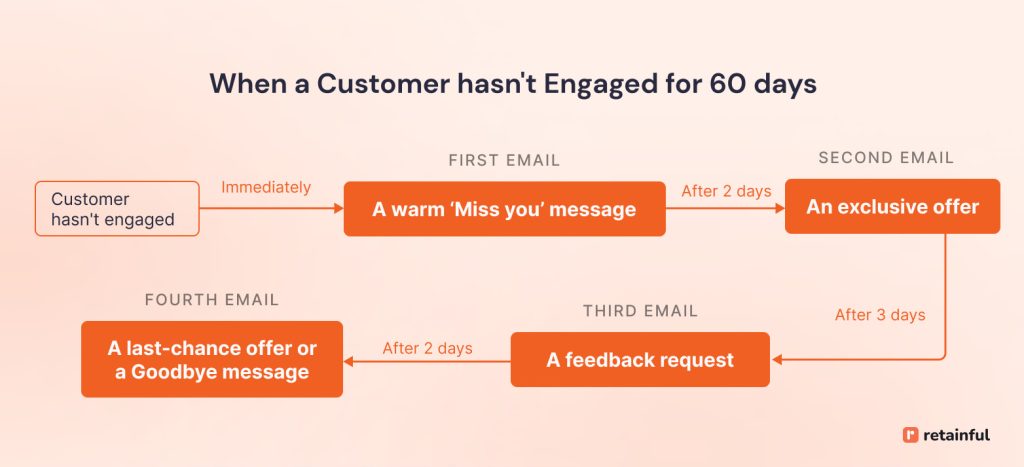
Emails three through six follow a pattern of alternating between additional value delivery and gentle meeting requests, with each email either providing something new and useful or referencing a specific trigger that creates a natural context for re-engagement. Breakup emails — a final "I don't want to keep reaching out if the timing isn't right — should I close your file for now?" — consistently generate higher reply rates than continued value-adds because they create a sense of finality that motivates action from prospects who have been meaning to respond but haven't gotten around to it.
Personalization at Scale
The personalization that makes B2B email sequences effective — referencing specific company news, acknowledging the prospect's specific role context, adapting the value proposition to the prospect's industry — is also the personalization that is most difficult to scale. A truly personalized first email to each prospect requires research and individual writing time that is not compatible with the volume requirements of most demand generation programs. The solution is a tiered personalization model that concentrates high-effort personalization where it produces the highest return, and uses structured templates with variable fields where volume requirements make individual research impractical.

Tier 1 personalization is reserved for the highest-value target accounts — typically the top 10-20% of the prospect list by account quality score or revenue potential. For these accounts, the SDR or account executive researches the specific company, identifies a recent trigger or specific pain point, and writes a genuinely customized first email that references company-specific context. This level of personalization produces reply rates of 10-20% in well-executed programs — significantly above the 2-5% typical of template-based sequences — and is worth the additional time investment for high-value accounts where a single conversion justifies the research cost many times over.
Tier 2 personalization uses segment-specific templates — email copy customized for specific industry verticals, company size tiers, or persona types — with variable fields that pull company name, first name, industry-specific pain points, and relevant social proof from a structured data source. A template for VP of Marketing at Series B SaaS companies includes different value propositions, pain point references, and case study selections than a template for VP of Marketing at mid-market manufacturing companies, even though both use the same underlying template structure. Tier 2 personalization produces reply rates of 5-10% when the segment definitions are specific enough to allow genuinely relevant content selection.
Tier 3 personalization is the minimum viable personalization for volume prospecting — first name, company name, and job function personalization using merge fields, with a value proposition and pain point reference that is appropriate for the broadest relevant audience segment. Tier 3 templates produce reply rates of 2-4% and are appropriate for high-volume outreach programs where the economics of individual research do not justify the time cost, but where some personalization is still significantly better than the reply rates of fully generic outreach.
Subject Lines: The Gateway Metric
In B2B email prospecting and nurturing, the subject line determines whether the email is opened — and the rest of the sequence's craft is irrelevant if the email never gets opened. B2B email subject line best practices are well-documented from large-scale A/B test data collected by email platforms and sales engagement tools, and they consistently point toward a counterintuitive conclusion: the subject lines that generate the highest open rates are not the most creative or the most descriptive — they are the most contextual, specific, and low-pressure.
Subject lines that reference a specific, relevant context ("Following up on [Company]'s Q3 expansion" or "[First Name], question about [specific challenge]") consistently outperform generic subject lines ("Increase your marketing ROI" or "Quick question about your team") because they signal to the recipient that the email is specifically relevant to them rather than a generic blast. Subject lines under 50 characters perform better on mobile than longer subject lines because they display fully without truncation. Subject lines that include the recipient's first name or company name generate higher open rates than subject lines that do not, though the incremental benefit of name personalization has declined as it has become ubiquitous enough that recipients recognize it as automated personalization rather than genuine personal attention. Questions as subject lines ("How [Company] is handling [challenge]?") tend to outperform declarative statements because they invite the recipient into a conversation rather than asserting a claim.
Deliverability: The Foundation Everything Else Depends On
B2B email sequence performance is only as good as the deliverability of the emails being sent. An email sequence with a 25% open rate and a 5% reply rate when delivered to the inbox produces 0% of those results if it lands in the spam folder. Deliverability is the invisible prerequisite that most B2B email programs undermanage until a significant deliverability problem — domain blacklisting, bulk spam folder placement, a high bounce rate that triggers mail provider suppression — forces an emergency response that takes weeks to resolve.

The deliverability practices that protect B2B email programs are: sending domain warming (new sending domains and email addresses should be warmed gradually — starting at 20-30 emails per day and increasing volume over 4-6 weeks — before sending at full prospecting volume), list hygiene (regularly removing hard bounces, unsubscribes, and long-term non-engagers from active sequences to maintain engagement rates that email providers use as quality signals), DKIM/SPF/DMARC authentication (technical email authentication standards that confirm to receiving mail servers that the sending domain is legitimate — non-compliance with these standards is the most common cause of inbox placement failures for new sending domains), and sending cadence limits (most email providers flag accounts that send high volumes of identical or similar emails from a single address in a short window — distributing sequence sends across the day and limiting daily sending volume per address protects against this pattern-matching flagging).
Frequently Asked Questions
How many emails should a B2B prospecting sequence have?
Research from sales engagement platforms consistently shows that 4-6 emails over 2-3 weeks is the optimal window for cold outbound prospecting sequences before diminishing returns set in. Sequences longer than 6 emails to cold prospects produce declining marginal reply rates per additional email, and the negative brand impression created by over-persistence with unresponsive prospects eventually exceeds the marginal conversion value of additional touches. The final email in the sequence should always be a low-pressure "closing the loop" email that gives the prospect a clear and easy way to opt out of further contact — this protects deliverability and occasionally generates replies from prospects who were interested but not yet ready to engage.
What is a good reply rate for B2B cold email sequences?
A reply rate of 5-10% across the full sequence is considered strong for well-targeted B2B cold email outreach. Reply rates below 3% indicate that the sequence has a fundamental problem — either the audience is not well-matched to the value proposition, the personalization is insufficient, the subject lines are not generating opens, or the content is not compelling enough to prompt a reply. Reply rates above 15% are excellent and typically reflect either an unusually well-targeted, highly personalized Tier 1 sequence, a particularly compelling offer, or exceptional timing (reaching prospects at a moment when the problem the email addresses is acutely relevant).
Should B2B email sequences be sent from marketing automation or sales tools?
Outbound prospecting sequences should be sent from sales engagement tools (Outreach, Salesloft, Apollo, HubSpot Sequences) from individual rep email addresses, not from marketing automation platforms. Prospecting emails sent from marketing platforms are flagged as bulk email by recipients and receiving mail servers, reducing deliverability and the personal impression that is essential to prospecting effectiveness. Nurture sequences, on the other hand, should be sent from marketing automation platforms — they are broadcast in nature (sent to large segments based on behavioral criteria) and are expected to appear as marketing emails rather than personal outreach. The distinction is: if the email is pretending to be personal, it should be sent through tools that deliver it in a way consistent with personal email; if the email is transparently from the marketing team, a MAP is the appropriate delivery mechanism.
How do we reduce unsubscribe rates in B2B email nurture programs?
Unsubscribe rates in B2B nurture programs are primarily driven by three factors: sending frequency that exceeds the subscriber's tolerance for the content type (addressable by reducing cadence for segments that show high unsubscribe rates), content that is not relevant to the subscriber's current stage or interests (addressable by improving segmentation and behavioral targeting in the nurture program), and poor email quality (content that does not deliver on the value promised in the subject line). The most effective unsubscribe rate reduction strategy is improving content relevance — a subscriber who consistently receives emails that are genuinely useful to their work will not unsubscribe even at higher frequencies than a subscriber who receives generic content regardless of their engagement preferences.
What personalization variables have the biggest impact on B2B email reply rates?
The personalization variables with the greatest documented impact on B2B email reply rates are, in order: company-specific context (referencing a recent company news item, funding announcement, leadership change, or product launch — signals genuine research and immediate relevance), role-specific pain point (addressing the specific challenges associated with the prospect's job function and seniority level rather than a generic value proposition), industry-specific language and examples (using the prospect's industry terminology and referencing challenges and benchmarks specific to their sector), and social proof from comparable companies (referencing case studies or outcomes from companies that match the prospect's profile — same industry, same size range). First name personalization and company name personalization have become table stakes that are expected but do not meaningfully differentiate a personalized sequence from a template sequence in the prospect's perception.
How do we A/B test B2B email sequences effectively?
Effective A/B testing of B2B email sequences requires testing one variable at a time to produce interpretable results, sufficient sample size (a minimum of 200 recipients per variant to achieve statistical significance for open rate tests, and 500+ per variant for reply rate tests given the lower baseline rates), and sufficient duration (at least 2 weeks per test to control for day-of-week effects and allow the full sequence to run). The highest-impact variables to test, in order of typical effect size, are: subject line (can move open rates by 20-50%), first sentence (the highest-impact element after subject line — the first sentence determines whether the reader continues), call to action type (the specific meeting request format, offer type, or next step ask), and email length (shorter vs. longer — the answer varies by audience segment and value proposition complexity). Testing sequence structure variables (number of touches, spacing between emails) requires longer experimental windows and more controlled conditions than single-email variable tests, and should be reserved for programs with high enough volume to produce statistically reliable results within the required time horizon.
Key Takeaways
- Most B2B email sequences fail due to sender-centric design.
- Effective sequences focus on recipient needs and context.
- Three types of email sequences serve distinct B2B objectives.
- Success metrics vary by sequence type, focusing on engagement.
Frequently Asked Questions
- Why do most B2B email sequences fail?
- They often focus on what the sender wants to say instead of what the recipient needs to hear.
- What are the three types of B2B email sequences?
- The three types are outbound prospecting sequences, nurture sequences, and sales acceleration sequences, each serving different purposes.
- What is the primary success metric for outbound prospecting sequences?
- The primary metric is the reply rate, which includes all replies, not just positive ones.
- How do nurture sequences differ from outbound prospecting sequences?
- Nurture sequences target known prospects who have engaged previously, while outbound prospecting sequences target cold prospects with no prior engagement.
See Where Your Business Stands in Search
Get a free site audit. We identify what is holding you back and what to fix first.
Related Resources
Explore more insights to enhance your digital marketing strategy
B2B Demand Generation: Building a Pipeline Engine That Scales
A practical guide to building and optimising demand gen programs that consistently fill the top of funnel with qualified pipeline.
Revenue Attribution Platform
See exactly which campaigns, channels, and plays drive closed revenue — not just leads. Multi-touch attribution built for B2B revenue teams.
See RankWorks in Action
Book a 30-minute demo and see how leading B2B marketing teams connect demand programs to pipeline and revenue.