Go-to-Market Strategy: Prioritizing Plays by Revenue Potential

Most GTM teams run too many plays at once. Learn how to score and prioritize GTM motions by actual revenue potential using pipeline data.
In the fast-paced world of B2B marketing, running too many go-to-market (GTM) plays can lead to a myriad of issues. Companies often find themselves spreading their efforts too thin, resulting in diffuse focus and unclear accountability. When every GTM play is treated as equally important, it becomes challenging to determine which initiatives truly drive revenue and which ones drain resources without yielding significant returns. This lack of prioritization can hinder a company's ability to achieve its revenue goals and maintain a competitive edge in the market.
What "Revenue Potential" Means for a GTM Play
Understanding the revenue potential of a GTM play is crucial for effective prioritization. Revenue potential is not just about the expected pipeline; it encompasses several key factors that determine the financial viability of a play. These factors include the expected pipeline, average deal size, velocity, win rate, and resource cost. Each of these elements plays a vital role in assessing the true value of a GTM initiative.
The expected pipeline refers to the total potential revenue that a GTM play can generate. However, not all pipeline is created equal. A high pipeline value might look promising on the surface, but if the deals within that pipeline have a low probability of closing, the actual revenue generated will fall short of expectations. Therefore, it's essential to evaluate the quality of the pipeline by considering factors such as the average deal size and win rate.
Average deal size is another critical component of revenue potential. Larger deals can significantly impact revenue, but they often require more time and resources to close. Velocity, or the speed at which deals move through the sales funnel, is equally important. A GTM play that generates quick wins can provide immediate revenue boosts, whereas slower-moving deals might tie up resources for extended periods. Finally, the resource cost associated with executing a GTM play must be weighed against the potential revenue it can generate. High resource costs can erode profitability, making it essential to balance investment with expected returns.
The Four GTM Motion Types
Inbound
Inbound marketing is a GTM motion that focuses on attracting potential customers through valuable content and engagement. When executed effectively, inbound can generate a real pipeline by drawing in leads that are genuinely interested in the product or service. However, inbound efforts can also produce noise if not properly targeted. For instance, content that attracts a broad audience without aligning with the ideal customer profile (ICP) may result in a high volume of unqualified leads. To ensure inbound efforts contribute to revenue potential, companies must focus on creating content that resonates with their ICP and guides prospects through the buyer's journey.
Outbound
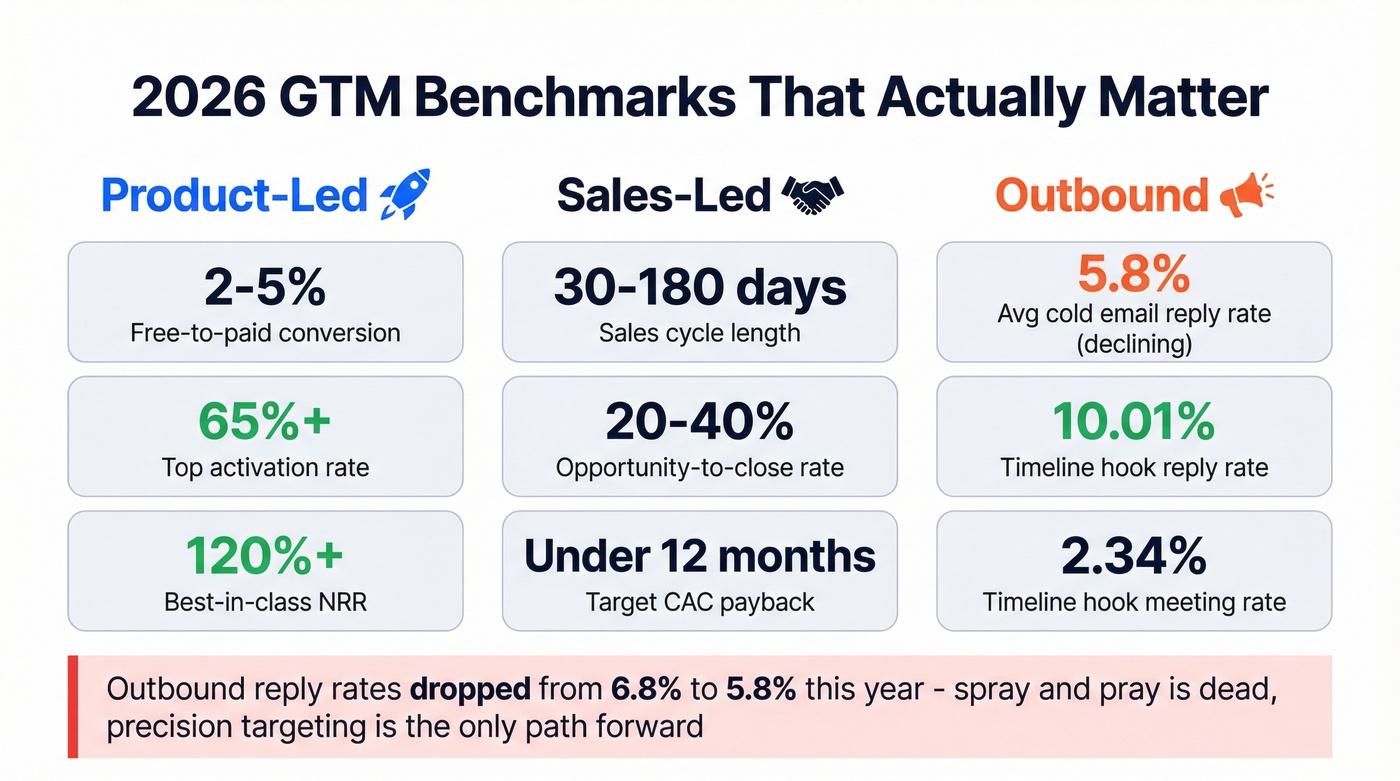
Outbound marketing involves proactively reaching out to potential customers through channels such as cold calling, email campaigns, and direct mail. This GTM motion can be effective under specific conditions, such as when targeting a well-defined ICP or when launching a new product that requires direct engagement. However, outbound efforts often fail due to poor targeting, lack of personalization, or inadequate follow-up. To maximize revenue potential, companies must ensure their outbound strategies are data-driven, personalized, and aligned with the needs of their target audience.
Product-Led Growth
Product-led growth (PLG) is a GTM motion that leverages the product itself as the primary driver of customer acquisition and expansion. This approach is particularly effective in B2B scenarios where the product offers a self-service model or free trial that allows users to experience its value firsthand. However, PLG may not be suitable for all B2B companies, especially those with complex products that require extensive onboarding or customization. To determine if PLG is a viable strategy, companies must assess whether their product can deliver immediate value and drive user adoption without significant intervention.
Partner-Led
Partner-led GTM motions involve collaborating with other companies to reach new markets or expand existing ones. While partnerships can offer access to new customer bases and enhance credibility, revenue expectations must be realistic. Common overestimations occur when companies assume that partners will prioritize their offerings or when the partnership lacks clear alignment on goals and incentives. To maximize revenue potential, companies must establish strong relationships with partners, ensure mutual benefits, and set clear expectations for collaboration outcomes.
How to Score GTM Plays by Revenue Potential
Scoring GTM plays by revenue potential requires a comprehensive model that considers multiple factors. The key components of this model include ICP fit rate, average deal size, time-to-close, win rate compared to other motions, and resource cost per pipeline dollar. Each of these factors contributes to a holistic view of a GTM play's potential to drive revenue.
ICP fit rate measures how well a GTM play aligns with the ideal customer profile. A high ICP fit rate indicates that the play is likely to attract leads that are more likely to convert, increasing the overall win rate. Average deal size provides insight into the potential revenue from each closed deal, while time-to-close assesses the speed at which deals progress through the sales funnel. A shorter time-to-close can enhance cash flow and reduce the opportunity cost of tied-up resources.
Win rate is a critical metric that compares the success of a GTM play to other motions. A higher win rate suggests that the play is more effective in converting leads into customers. Finally, resource cost per pipeline dollar evaluates the efficiency of a GTM play in generating revenue relative to the resources invested. By weighting these factors appropriately, companies can develop a scoring model that accurately reflects the revenue potential of each GTM play and guides prioritization decisions.
Using Historical Deal Data to Rank Plays
Historical deal data is a valuable resource for ranking GTM plays by revenue potential. To leverage this data effectively, companies must extract relevant information from their CRM systems, such as deal size, time-to-close, win rate, and resource allocation. By analyzing this data, companies can identify patterns and trends that inform their GTM strategy.

Building a comparison of GTM plays involves evaluating historical performance against the scoring model criteria. This analysis helps identify which plays have consistently delivered high revenue potential and which ones have underperformed. However, incomplete data can pose challenges. In such cases, companies should focus on gathering additional insights from sales teams, customer feedback, and market research to fill in the gaps and make informed decisions.
Building a GTM Prioritization Framework with RevOps
Developing a GTM prioritization framework requires collaboration with Revenue Operations (RevOps) to align sales, marketing, and customer success efforts. Key stakeholders, including CMOs, VPs, and GTM directors, must be involved in the decision-making process to ensure buy-in and alignment across the organization.
Structuring the decision involves defining clear criteria for evaluating GTM plays, such as revenue potential, strategic alignment, and resource availability. By establishing a transparent framework, companies can prioritize plays based on their ability to drive revenue and support overall business objectives. When cutting a play that sales teams favor, it's essential to communicate the rationale behind the decision and highlight the benefits of reallocating resources to higher-potential initiatives.
How to Kill Low-Potential Plays
Stopping low-potential GTM plays can be politically sensitive, as it often involves reallocating resources and shifting focus away from established initiatives. To navigate these challenges, companies must frame the decision in terms of strategic priorities and revenue potential. By emphasizing the benefits of focusing on high-potential plays, companies can gain support from stakeholders and minimize resistance.
```htmlReal-World Example: Slack
Slack is a prime example of focusing its go-to-market strategy on a narrow ideal customer profile (ICP) and channel. Initially, Slack targeted small to medium-sized tech companies and utilized a bottom-up approach, allowing individual teams to adopt the tool organically. By concentrating on this specific segment, Slack grew its user base rapidly, achieving a $1 billion valuation in just eight months. This focused strategy helped Slack generate a pipeline of over 500,000 daily active users within its first year, proving the effectiveness of prioritizing a narrow ICP and channel.
Real-World Example: Zoom
Zoom employed a product-led go-to-market motion to prioritize high-revenue segments, focusing on delivering an exceptional user experience to drive adoption. By offering a freemium model, Zoom attracted a wide user base, which helped identify high-value enterprise customers. This strategy paid off significantly, as Zoom's revenue skyrocketed from $330.5 million in 2019 to $2.65 billion in 2021. By prioritizing high-revenue segments through a product-led approach, Zoom was able to capture significant market share and become a leader in the video conferencing space.

When reallocating resources, it's crucial to monitor the impact on overall performance and ensure that the transition is smooth. Companies should establish clear metrics for success and regularly review progress to identify any issues that may arise. By maintaining open communication and providing support to affected teams, companies can facilitate a successful transition and drive long-term growth.
Running a Quarterly GTM Review
A quarterly GTM review is an essential component of a dynamic GTM strategy. This review provides an opportunity to assess the performance of GTM plays, evaluate their revenue potential, and make informed decisions about prioritization. The cadence of the review should align with the company's business cycle and allow for timely adjustments to the GTM strategy.
The format of the review should include a comprehensive analysis of GTM play performance, discussions on strategic priorities, and input from key stakeholders. Attendees should include CMOs, VPs, RevOps leaders, and other relevant team members who can provide valuable insights and contribute to decision-making. The outcome of the review should include clear decisions on which plays to prioritize, adjust, or discontinue, as well as actionable plans for implementation.
By conducting regular GTM reviews, companies can maintain a focused and agile approach to their GTM strategy, ensuring that resources are allocated to initiatives with the highest revenue potential and aligning efforts with overall business objectives.
Key Takeaways
- Prioritizing GTM plays is essential for effective resource allocation.
- Revenue potential includes pipeline quality, deal size, velocity, and resource costs.
- Inbound marketing attracts leads but must align with the ideal customer profile.
- Partner-led strategies can expand markets but require realistic revenue expectations.
Frequently Asked Questions
- What is revenue potential in a GTM play?
- Revenue potential refers to the expected pipeline, average deal size, win rate, and resource costs. Evaluating these factors helps determine the financial viability of a GTM initiative.
- How can inbound marketing impact revenue?
- Inbound marketing can generate a real pipeline by attracting interested leads. However, it must target the ideal customer profile to avoid unqualified leads.
- What are the risks of outbound marketing?
- Outbound marketing can fail due to poor targeting, lack of personalization, or inadequate follow-up. Data-driven strategies are essential for maximizing revenue potential.
- When is product-led growth a suitable strategy?
- Product-led growth works well when the product offers self-service or free trials. Companies should assess if their product can deliver immediate value without extensive onboarding.
See Where Your Business Stands in Search
Get a free site audit. We identify what is holding you back and what to fix first.
Related Resources
Explore more insights to enhance your digital marketing strategy
B2B Demand Generation: Building a Pipeline Engine That Scales
A practical guide to building and optimising demand gen programs that consistently fill the top of funnel with qualified pipeline.
Revenue Attribution Platform
See exactly which campaigns, channels, and plays drive closed revenue — not just leads. Multi-touch attribution built for B2B revenue teams.
See RankWorks in Action
Book a 30-minute demo and see how leading B2B marketing teams connect demand programs to pipeline and revenue.