Webinar Strategy: How to Run Webinars That Drive Pipeline

Build a webinar program that consistently generates pipeline, not just registrations. Topic strategy, promotion, delivery, and follow-up frameworks for B2B webinars that convert.
Why Most B2B Webinars Fail to Generate Pipeline
Webinars are one of the most widely used demand generation tools in B2B marketing — and one of the most consistently underperforming. Most B2B marketing teams run webinars, invest in promotion to drive registrations, and then discover that a fraction of registrants actually attend, the attendees who do show up disengage early, and the pipeline generated from the webinar is minimal relative to the effort invested. The post-mortem typically identifies the same patterns: the topic was too broad or too product-focused to generate genuine professional interest, the format was a one-way presentation rather than an engaging learning experience, the registration-to-attendance rate was below 30% because the marketing materials oversold a webinar that underdelivered on its content promises, and the post-webinar follow-up was a batch email to all registrants regardless of engagement level. These are process and content failures, not channel failures — a webinar program designed with the right topic strategy, promotion approach, delivery format, and follow-up process consistently generates pipeline at competitive efficiency.
The fundamental design error in most webinar programs is optimizing for registration volume rather than for attendee value and engagement quality. Registration is an easy metric to improve with aggressive promotional tactics — compelling subject lines, multiple email reminders, paid list promotion — but registrations that don't convert to engaged attendees, and attendees who don't convert to pipeline, make the registration metric irrelevant as a measure of webinar program success. The metric that matters is pipeline influence per webinar — the number of attendees who progress to a sales opportunity within 90 days of attending, and the average deal size of webinar-influenced pipeline relative to non-webinar-influenced pipeline. Optimizing for pipeline influence rather than for registration volume requires different design choices at every stage of the webinar program: topic selection that prioritizes genuine professional utility, promotion that reaches the right audience rather than the largest audience, delivery that creates engagement rather than passive consumption, and follow-up that is differentiated by attendee engagement rather than uniform across all registrants.
Topic Strategy: Choosing Webinar Topics That Draw the Right Audience
Webinar topic selection is the most consequential decision in the webinar planning process because it determines both who attends (the audience quality) and whether attendees find the content valuable enough to engage, share, and act on (the pipeline conversion rate). The most common topic selection errors are: choosing topics that are too broad ("How to Improve Your Marketing Strategy") to attract a specific, qualified audience with shared professional context; choosing topics that are too product-centric ("How to Use [Our Platform] for Better Results") that signal promotional intent and depress registration from non-customers who are the most valuable pipeline audience; and choosing topics based on what the marketing team finds interesting rather than what the target ICP finds directly useful for their current professional challenges.

The topic selection process that consistently produces high-attendance, high-engagement webinars starts with three sources of intelligence: sales team intelligence about the questions, challenges, and objections that come up most frequently in prospect conversations (the topics that prospects are actively asking about are the topics that will resonate most when positioned as a webinar learning opportunity), customer success team intelligence about the use cases and challenges that customers are working through (the topics where customers are struggling are the topics where prospects are also struggling and would benefit from guidance), and keyword research on the search queries that the target ICP uses when researching the topic area (high-volume, informational search queries indicate that the target audience is actively seeking information on the topic, which predicts webinar interest). These three intelligence sources, combined, produce a topic priority list that is grounded in demonstrated audience interest rather than internal assumptions about what the audience should care about.
The topic framing — how the topic is named and positioned in promotional materials — is as important as the topic itself in determining registration rates. Topics that are framed as solutions to specific, recognized professional problems ("How to Cut Your Time-to-Value in Half Without Adding Headcount") consistently outperform topics framed as educational introductions ("Introduction to Customer Success Operations") or product features ("Getting the Most from [Platform] Reporting"). The solution framing directly addresses the prospect's functional motivation for attending — they are investing time in a webinar because they want to solve a specific problem, not because they want to be educated generally on a topic.
Webinar Promotion: Reaching the Right Audience
Webinar promotion strategy should prioritize audience quality over audience volume — 100 highly qualified attendees who match the ICP profile will generate more pipeline than 500 attendees who are loosely related to the topic area and unlikely to ever purchase. The promotional channels that most consistently deliver qualified webinar audiences for B2B are: email to the existing database (specifically segmented to the personas and industries for whom the topic is most directly relevant — a webinar about revenue operations processes should be promoted to revenue operations and sales leadership contacts, not broadcast to the entire database), LinkedIn sponsored content targeting (using LinkedIn's professional targeting to reach ICP-matched professionals who are not in the existing database — a particularly valuable channel for webinars designed to introduce the vendor to new audiences), direct outreach from the sales team (SDR and AE outreach to target accounts with specific personalization to the prospect's known challenges — more labor-intensive than email but dramatically higher conversion rates for the accounts where the relationship warrants personal outreach), and partner co-promotion (joint webinars with complementary vendors who serve the same ICP, co-promoted to both partner's databases — expanding reach to new audiences with pre-existing relevance to the topic).
The promotional timeline for a live webinar should begin 3 weeks before the event date and include: a save-the-date email 3 weeks out (establishing the date and the core value proposition of attending), a primary invitation email 2 weeks out with full topic detail and speaker credentials, a reminder email 1 week out emphasizing the specific learning outcome and the limited-access aspect if applicable, and a day-before and day-of reminder email that includes the joining instructions and a preview of the first insight that will be shared. This 5-email sequence for a 3-week promotion window is the minimum effective cadence — cutting it to 2-3 emails consistently produces 20-30% lower registration rates, while extending to 6-7 emails produces minimal incremental registration at the cost of increased unsubscribe rates from the most engaged segments of the database.
Webinar Delivery: Creating Engagement, Not Passive Viewing
The delivery format that produces the highest attendee engagement — and therefore the highest pipeline conversion — is interactive, conversational, and participant-focused rather than one-way lecture or slide-deck presentation. Webinar attendees who are given opportunities to participate — through polls, Q&A, breakout discussions, or direct interaction with the presenter — maintain attention at significantly higher rates than those who are receiving a passive presentation. The attention data from webinar platforms (GoToWebinar, Zoom Webinars, ON24, Hopin) consistently shows that average attention engagement drops by 40-60% in the second half of a 60-minute one-way presentation, while interactive webinar formats maintain 70-80% engagement through the full session.

The webinar delivery structure that most consistently produces high engagement and high pipeline conversion is: a strong hook in the first 3 minutes (a counterintuitive data point, a challenging question, or a rapid-fire insight that immediately signals that this webinar is going to deliver value different from what the attendee expected), a first poll within 5 minutes (used to understand the audience's current situation or perspective on the topic, demonstrate that the session is personalized to their specific context, and increase engagement through participation), 3-4 substantive insights delivered in 10-15 minute blocks (each insight should be specific, actionable, and connected to the overarching theme — avoid the common error of covering 8-10 insights superficially in favor of 3-4 insights with enough depth to be genuinely applicable), interactive Q&A throughout rather than concentrated at the end (responding to chat questions in real time maintains engagement better than batching all Q&A at the end of the session, when many attendees have already dropped off), and a clear CTA conclusion (the specific next step — a free trial, a 1:1 consultation, a downloadable resource — delivered at the moment of highest engagement before the webinar ends).
The Webinar Replay Strategy: Extending Your Content Investment
Live webinar attendance typically ranges from 25-40% of registered attendees — meaning 60-75% of the audience that expressed enough interest to register will not attend live. The on-demand replay strategy converts a portion of these non-attendees into engaged viewers, extending the content's reach and pipeline contribution beyond the live event. Replays should be available within 24 hours of the live event while the promotional momentum is still active, gated behind the same registration form to capture contact information from on-demand viewers, and promoted through a follow-up email to non-attendees with a subject line that communicates the specific value of the recording rather than a generic "you missed the webinar" message that positions the email as a second chance rather than a compelling opportunity.
On-demand webinar content also has persistent SEO and pipeline value when published on the website with proper optimization — a webinar title that matches the search queries the target audience uses, a transcript or highlights summary that makes the page indexable by search engines, and a topic-relevant meta description that drives clicks from organic search. Webinar content that remains accessible and discoverable on the website continues to generate registration and engagement from organic search traffic long after the live event date — making each well-produced webinar a persistent demand generation asset rather than a one-time event.
Post-Webinar Follow-Up: Converting Attendees to Pipeline
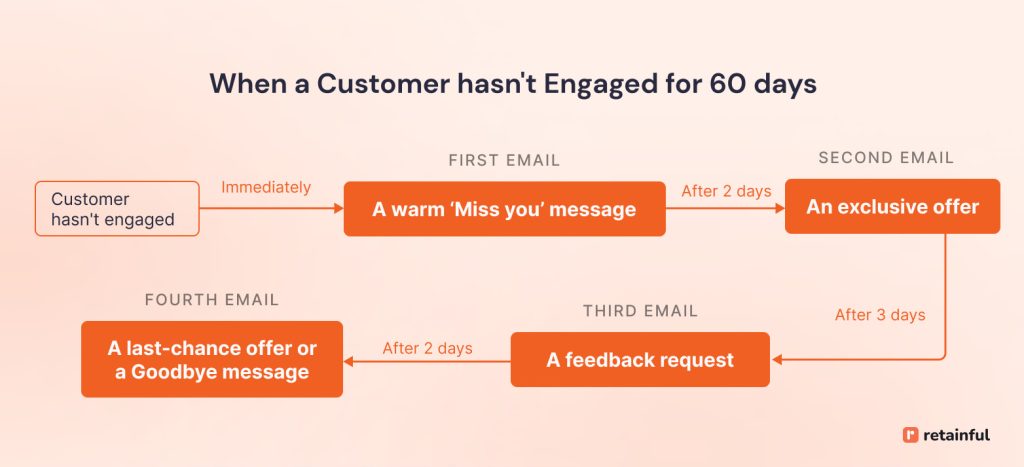
Post-webinar follow-up is where most of the webinar's pipeline value is either captured or lost. The follow-up approach that consistently produces the highest pipeline conversion differentiates between attendee engagement levels rather than sending the same follow-up to all registrants regardless of whether they attended, how long they engaged, and whether they indicated buying intent through poll responses, questions asked, or content downloaded during the session. A three-tier follow-up framework — highly engaged attendees, moderately engaged attendees, and non-attendees — produces dramatically better pipeline conversion than a single batch follow-up because each tier receives content and outreach calibrated to their actual level of engagement and interest.

Highly engaged attendees — those who attended the full session, asked questions, and responded to polls — should receive a personalized follow-up from the sales team or CSM within 24 hours, referencing the specific question they asked or the poll response they gave, and proposing a specific follow-up action (a one-on-one consultation on the topic they engaged with, a product demonstration of the capability the session featured, or an invitation to the next event in the series). Moderately engaged attendees — those who attended part of the session or engaged passively — should receive a marketing automation follow-up sequence that leads with the most valuable content from the session (a key framework, a research summary, a resource library link) and includes a lighter CTA (a self-service resource, a free trial, or an assessment tool rather than a direct sales meeting request). Non-attendees should receive the replay link and a brief value preview — not a sales meeting request, which creates friction before the prospect has experienced the content value that would motivate a meeting.
Frequently Asked Questions
What is the ideal length for a B2B webinar?
The optimal live webinar length for B2B demand generation is 45-60 minutes — long enough to deliver 3-4 substantive insights with meaningful depth, short enough to maintain attendee attention through the content and CTA without extending into the time that most attendees have not allocated. Webinars shorter than 30 minutes struggle to deliver enough substantive content to justify the registration friction; webinars longer than 75 minutes see dramatically increased dropout rates in the final quarter as attendees reach their attention limit or their next calendar commitment. The 45-60 minute format with a structured 10-15 minute Q&A session achieves the right balance of educational depth and practical interactivity for the B2B audience. For educational series formats — multi-session programs that deliver a complete curriculum over 4-6 sessions — shorter 30-45 minute sessions work well because the series context provides the continuity that each individual session doesn't need to deliver alone.
What registration-to-attendance rate should we expect for B2B webinars?
Industry benchmark registration-to-attendance rates for live B2B webinars range from 30-45% for well-promoted webinars to 15-25% for webinars with longer registration windows (where the time between registration and the live event is 3+ weeks, giving more opportunity for conflicts to emerge). The factors that most significantly improve attendance rates above benchmark are: time-of-day selection (Tuesday-Thursday, 10am-2pm in the primary audience's time zone, consistently outperforms Monday mornings, Friday afternoons, and early morning slots), day-before and day-of reminder emails (teams that send both reminders consistently achieve 8-12% higher attendance rates than those who send only a day-before reminder), and registration confirmation pages that offer calendar invite downloads (reducing the friction that causes registrants to forget the webinar when the time arrives). Attendance rates below 20% consistently indicate one of three problems: the topic or speaker lineup didn't match the audience's expectations set by promotional materials, the promotional campaign reached an audience that wasn't genuinely interested in the topic, or the time slot consistently conflicts with the target audience's schedule.
Should we use internal or external speakers for our webinars?
The most effective webinar speaker lineup for B2B demand generation is a combination of internal subject matter experts and external practitioners or customers — leveraging the internal speaker's product knowledge and the external speaker's credibility and audience reach. Pure internal speaker webinars (only the vendor's team presenting) suffer from the promotional presentation perception that reduces registration from non-customers who assume a vendor-only webinar will be primarily commercial. Pure external speaker webinars (a customer or partner presenting without internal involvement) miss the opportunity to demonstrate the vendor's expertise and connect the insights to the product's capabilities. The co-presenting format — a vendor subject matter expert and an external practitioner sharing perspectives on the same topic — combines both credibility dimensions and typically generates higher registration, higher attendance rates, and better pipeline conversion than either speaker type alone.
How do we build a sustainable webinar program rather than one-off events?
A sustainable webinar program — one that generates consistent pipeline month over month without requiring the same launch effort for each individual event — is built around a recurring series format rather than isolated one-off webinars. A monthly or bi-monthly series with a consistent topic theme (a "Revenue Operations" series, a "B2B Marketing Leaders" series, or an "AI in Marketing" series) builds a subscriber audience that registers once for the series and attends multiple sessions, reducing the per-webinar promotional effort required to achieve target attendance. The series format also enables cumulative learning across sessions — each session builds on the previous, creating a reason for consistent attendees to return and a structured content library that on-demand viewers can work through progressively. Series promotion benefits from compound awareness: the more sessions the series completes, the more word-of-mouth its reputation generates within the target professional community, reducing the paid promotion investment required to maintain registration volume over time.
How do we make webinar Q&A more engaging and less awkward?
Webinar Q&A is frequently the lowest-engagement portion of a webinar session because the moderator is waiting for questions that may arrive slowly while the audience experiences an uncomfortable silence, or because the questions that do arrive are too narrow or too basic to generate broad audience interest. The Q&A format improvements that most effectively eliminate awkwardness and increase engagement are: plant 2-3 starter questions prepared in advance (the moderator or a colleague posts pre-written questions in the Q&A tool to seed the flow if organic questions are slow to arrive), use polls to transition into Q&A (a final poll that asks attendees what question they most want answered creates a structured question set that the presenter can respond to while organic questions arrive), enable anonymous questions (attendees are significantly more likely to ask candid, interesting questions when the question is not attributed to them publicly), and respond to questions during the presentation rather than only at the end (reading and responding to interesting questions that arrive during the content portion keeps the presenter connected to the audience and makes the Q&A feel continuous rather than concentrated into an awkward final segment).
What technology platform should we use for B2B webinars?
The webinar technology decision depends on the features the program requires: basic screen sharing and presentation webinars are well-served by Zoom Webinars or GoToWebinar, which are familiar to most B2B audiences and simple to administer; webinars requiring advanced engagement features (polling, breakout rooms, interactive whiteboard, in-webinar content delivery) benefit from platforms like ON24 or Hopin that are purpose-built for engagement-rich webinar experiences; high-production-value webinars with multi-camera setups, pre-recorded content segments, and broadcast-quality production should use Streamyard or Restream which provide production control unavailable in meeting-first platforms. For most mid-market B2B companies running 1-2 webinars per month with standard presentation and Q&A format, Zoom Webinars or GoToWebinar provide the right combination of audience familiarity, administrative simplicity, and CRM integration capabilities without the premium costs of more specialized platforms.
Key Takeaways
- Most B2B webinars fail due to poor topic selection and engagement.
- Registration volume does not equate to successful pipeline generation.
- Effective topics should address specific professional challenges.
- Follow-up should vary based on attendee engagement levels.
Frequently Asked Questions
- Why do many B2B webinars fail?
- Many B2B webinars fail because they choose broad or overly product-focused topics, leading to low engagement. Additionally, poor follow-up processes contribute to minimal pipeline generation.
- What is the key metric for webinar success?
- The key metric for webinar success is pipeline influence per webinar. This measures how many attendees progress to sales opportunities within 90 days.
- How should I choose webinar topics?
- Choose topics based on sales team insights, customer struggles, and relevant keyword research. Focus on specific problems that your target audience faces.
- What should follow-up processes look like?
- Follow-up processes should be tailored based on attendee engagement. Instead of sending a uniform email to all registrants, differentiate based on how engaged each attendee was.
See Where Your Business Stands in Search
Get a free site audit. We identify what is holding you back and what to fix first.
Related Resources
Explore more insights to enhance your digital marketing strategy