What Are Marketing Attribution Models?
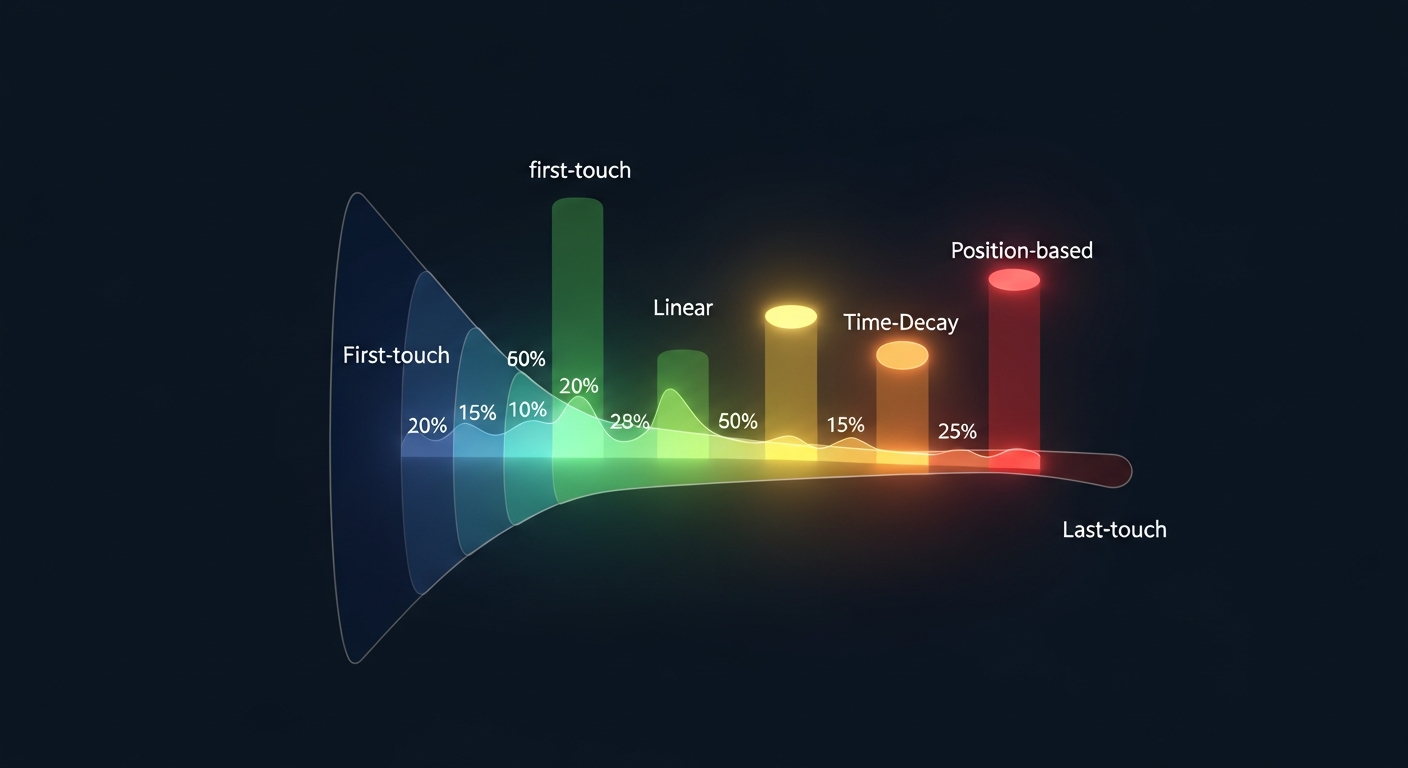
Marketing attribution models are frameworks used to determine how credit should be assigned across marketing interactions that occur before a conversion, opportunity, pipeline event, or revenue outcome.
In simple terms, attribution models attempt to answer one critical business question:
Which marketing activities influenced the customer to buy?
Consider a typical buyer journey. A prospect discovers a company through organic search, reads several articles, attends a webinar, engages with social content, receives marketing emails, speaks with a sales representative, and becomes a customer. Which interaction deserves credit?
The answer depends on which model you use
First-Touch
Organic Search (100%)
Last-Touch
Email Campaign (100%)
Linear
All interactions equally
Each approach produces a different perspective. Understanding those differences is essential for making better marketing decisions.
Why Attribution Models Exist
Attribution models exist because marketing influence is difficult to measure. Revenue often occurs weeks or months after initial discovery. During that time, buyers interact with numerous channels, campaigns, stakeholders, and content assets. Without attribution, organizations struggle to answer fundamental questions.
Important distinction: Attribution models are not designed to reveal absolute truth. They are designed to support better decision-making. Many organizations mistakenly treat attribution reports as definitive explanations of reality. In practice, they are analytical frameworks built on assumptions - and the value comes from understanding those assumptions.
The Evolution of Marketing Attribution Models
Marketing attribution has evolved significantly over the past twenty years alongside the growing complexity of buyer journeys.
Early Digital Era
Lead source tracking, referral source tracking, basic web analytics
Most reporting focused on a single interaction
First-Touch Era
Organizations wanted to understand demand creation and initial discovery
Helped justify awareness investment
Last-Touch Era
Marketing automation and CRM maturity drove focus on conversion
Many CRM platforms still default to last-touch
Multi-Touch Era
Complexity demanded credit distribution across multiple interactions
Represented a major advancement in measurement
Data-Driven Era
Machine learning enables algorithmic credit assignment from behavior patterns
Most sophisticated approach available - but limited by data gaps
AI Search Era (Now)
Buyer discovery increasingly happens inside AI systems before attribution can see it
Creating the largest attribution gap since digital analytics began

Modern B2B buyer journeys involve many stages across multiple channels, devices, and stakeholders. Attribution models can only credit the stages they can observe.
First-Touch Attribution
Definition: Assigns 100% of the credit for a conversion, opportunity, or revenue event to the first recorded interaction between a prospect and a company.
Example Journey - First-Touch Result
Result: 100% credit to Organic Search
Best for
- Demand generation evaluation
- Brand discovery channel analysis
- Awareness-stage marketing ROI
- Understanding how buyers find you
Key limitation
- Ignores everything after discovery
- Overvalues awareness channels
- Undervalues nurturing and conversion
- Not suitable for conversion analysis
Last-Touch Attribution
Definition: Assigns 100% of the credit for a conversion or revenue event to the final measurable interaction before conversion occurs. One of the most widely used models - many CRM platforms still default to some form of last-touch reporting.
Example Journey - Last-Touch Result
Result: 100% credit to Email Nurture (final interaction before demo)
Best for
- Conversion trigger analysis
- Bottom-funnel optimization
- Campaign conversion performance
- Lead capture activity evaluation
Key limitation
- Ignores everything before conversion
- Overvalues branded search and retargeting
- Does not explain demand creation
- Distorts brand vs demand investment
Linear Attribution
Definition: Distributes credit equally across every measurable interaction in the customer journey. If a prospect engages with five touchpoints, each receives 20% of the credit.
Example Journey - Linear Result (4 touchpoints, 25% each)
Result: Equal credit distributed across all touchpoints
Best for
- Balanced full-funnel reporting
- Multi-channel journey analysis
- Reducing single-channel bias
- Cross-channel contribution visibility
Key limitation
- Assumes all interactions are equal
- A brief impression treated same as a webinar
- Oversimplifies actual influence weighting
- Less useful for precise budget decisions
Time Decay Attribution
Definition: Assigns more credit to interactions that occur closer to conversion. The assumption is that recent interactions have greater influence on purchasing decisions. Earlier interactions still receive credit, but with less weight.
Example credit distribution
Best for
Enterprise sales cycles, complex B2B journeys, long buying processes where recent momentum matters
Key limitation
May undervalue demand creation. A highly influential early-stage interaction months ago gets minimal credit.
Position-Based Attribution (U-Shaped)
Definition: Assigns significant credit to both the first interaction and the conversion interaction, distributing the remaining credit across middle-stage touchpoints.
First Touch
Middle Stages
Conversion Touch
Best for
- Demand generation + conversion balance
- SaaS organizations
- Teams transitioning from single-touch
- Marketing leaders who need funnel balance
Key limitation
- Weighting still assumption-based
- May undervalue middle-funnel influence
- Peer validation and product demos can be more influential than position suggests
Data-Driven Attribution
Definition: Uses machine learning and statistical analysis to determine credit distribution based on observed customer behavior patterns rather than predefined rules. Often described as the most sophisticated attribution approach currently available.
Best for
- Large enterprises with high data volume
- Mature analytics teams
- High-volume conversion environments
- Sophisticated RevOps functions
Critical limitation
- Only as good as available data
- Cannot analyze invisible interactions
- AI search gaps still unresolved
- Dark social remains invisible
- Buying committee discussions missing
The fundamental constraint: Machine learning cannot analyze interactions it cannot see. Even the most advanced data-driven attribution model is limited by the same core problem as every other model - missing buyer interactions from AI search, dark social, and private research.
Attribution Model Comparison Matrix
This comparison highlights the most important reality in attribution: no model is universally correct. Each model was designed to answer a different business question.
Which Marketing Attribution Model Should You Choose?
The honest answer to "which model is best?" is: it depends on the business question you are trying to answer. Organizations often make the mistake of searching for a single source of truth. Multiple models frequently provide more useful insights than any single model.
Goal: Demand Generation
Use: First-Touch, Position-BasedWhich channels create awareness? Which campaigns generate demand? How are buyers finding us?
Goal: Conversion Optimization
Use: Last-Touch, Time DecayWhat drives demo requests? What accelerates opportunities? Which activities convert?
Goal: Journey Analysis
Use: Linear, Multi-TouchWhich channels appear throughout the journey? How do touchpoints interact? What content supports engagement?
Goal: Enterprise Measurement
Use: Data-Driven, Account-BasedHow do buying committees engage? What patterns predict revenue? How do large, complex journeys unfold?
Goal: Executive Decision-Making
Use: Multiple Models + VisibilityWhat drives growth? How confident are forecasts? Where should we invest next quarter?
Why Attribution Models Often Disagree
One of the most frustrating aspects of attribution reporting is that different models frequently produce different answers from the same data. This is not a sign that the models are wrong - it means they are designed to answer different questions.
Same journey, six different interpretations
Organic Search → LinkedIn → Webinar → Email Campaign → Demo Request → Customer
First-Touch
"Where did discovery occur?"
Organic Search
Last-Touch
"What triggered conversion?"
Email Campaign
Linear
"What contributed throughout the journey?"
Every touchpoint equally
Time Decay
"What influenced most recently?"
Email Campaign and Demo Request
Position-Based
"What created awareness and action?"
Organic Search and Email Campaign
Data-Driven
"What patterns appear most influential?"
Depends on historical behavior data
None of these answers are wrong. They are different interpretations of the same journey. Attribution models do not reveal truth - they reveal perspective.
Why Attribution Models Break in Modern B2B
Attribution models were originally designed for a relatively simple digital environment. Today's buying journeys are dramatically more complex - and attribution increasingly struggles to keep up.

Attribution captures visible interactions on the left. An increasing portion of buyer influence occurs on the right - invisible to every attribution model.
Buying Committees Create Attribution Gaps
A single B2B purchase may involve executives, procurement, technical evaluators, department leaders, end users, and finance stakeholders. Each experiences a different journey. One discovers the company through search. Another relies on peer recommendations. Another asks ChatGPT for vendor comparisons. Attribution systems often struggle to connect these journeys into a single account-level narrative.
Dark Social Creates Invisible Influence
Dark social refers to interactions in private environments - Slack, Teams, WhatsApp, email forwarding, internal discussions. These interactions frequently influence buying decisions without leaving any attribution trail. A prospect receives a Slack recommendation, searches for the brand, and visits the website directly. Attribution reports "Direct Traffic." The real influence happened elsewhere.
Anonymous Research Happens Before Attribution Exists
Modern buyers research solutions extensively before identifying themselves. They read articles, review competitors, explore categories, and compare vendors - much of it before any form submission, lead creation, or CRM record. By the time attribution begins, significant influence may have already occurred.
Multi-Device Behavior Fragments Attribution
Buyers switch between mobile devices, laptops, tablets, personal devices, and work devices. Identity resolution across these environments remains imperfect, causing attribution systems to miss cross-device interactions or double-count others.
Offline Influence Remains Difficult to Measure
Industry events, conferences, executive introductions, customer referrals, and analyst recommendations often shape purchasing decisions without generating any attribution data. These interactions can be among the most influential in the entire buying process.
Attribution Models and AI Search
AI search is creating one of the most significant attribution challenges in modern marketing. Traditional attribution was designed around a relatively measurable discovery process. AI search changes that process fundamentally.
Traditional Journey (Attribution Works)
Modern Journey (Attribution Gap)
The result: first-touch attribution becomes less reliable, last-touch becomes more misleading, multi-touch still misses discovery, and data-driven attribution lacks critical inputs. All four models fail in different ways when AI-assisted research precedes website activity. For a detailed analysis, see Marketing Attribution in the Age of AI Search.
The Difference Between Attribution and Influence
This distinction is becoming increasingly important as AI search and dark social expand the gap between what attribution can see and what actually influenced the buyer.
Attribution is valuable. Influence is broader. The most successful organizations understand both - and build measurement frameworks that account for the full picture. For a deeper exploration, see Dark Social Attribution and How CMOs Should Use Attribution Data.
Common Marketing Attribution Mistakes
The problem is rarely the attribution model itself. The problem is how attribution data is interpreted and applied. These five mistakes lead to poor decisions even in organizations with sophisticated analytics.
Treating Attribution as Absolute Truth
Attribution models are frameworks built on assumptions with blind spots. Organizations that treat attribution as evidence rather than certainty tend to make better decisions.
Relying on a Single Attribution Model
Different models answer different business questions. First-touch explains discovery. Last-touch explains conversion. Multi-touch explains contribution. Using multiple models often creates more useful insights than relying on any single model.
Ignoring Dark Social
The most influential buyer interactions often happen in private environments that attribution cannot see. Organizations that ignore dark social consistently underestimate the influence of word-of-mouth and community-driven buying behavior.
Underinvesting in Brand
Brand-building activities often receive limited attribution credit. Organizations sometimes cut awareness investment despite its influence on future pipeline - then face declining demand months later.
Optimizing for Attribution Instead of Growth
The purpose of attribution is not to maximize attributed revenue. The purpose is to improve business outcomes. Organizations focused exclusively on channel credit often lose sight of long-term growth drivers.
Attribution vs Marketing Mix Modeling
Attribution and Marketing Mix Modeling (MMM) are often discussed together but they solve different problems. Understanding the distinction matters when building a complete measurement strategy.
Neither approach is universally better. Attribution provides tactical insight about individual journeys. MMM provides strategic insight about media investment patterns. Leading organizations increasingly use both. Together they create a stronger measurement foundation than either can provide alone.
What Is Account-Based Attribution?
Traditional attribution models focus on individual contacts. Modern B2B buying often revolves around buying committees rather than individuals. A typical enterprise purchase may involve executives, procurement, finance, security teams, technical evaluators, and end users - each experiencing a different journey. Account-based attribution attempts to connect these separate journeys at the account level.
Benefits
- Better buying committee visibility
- Improved enterprise reporting
- Stronger revenue team alignment
- More accurate opportunity analysis
Still limited by
- Dark social interactions
- AI-assisted discovery
- Anonymous pre-engagement research
- Offline buying committee discussions
Marketing Attribution Software and Platforms
Different attribution platforms support different methodologies and use cases. The most important question is not which platform to choose - it is what buyer behavior the platform can actually observe.
Google Analytics 4
Best for: Website analytics, digital conversion reporting
Includes data-driven attribution
HubSpot
Best for: Mid-market teams, CRM-connected reporting
Supports first-touch, last-touch, linear, U-shaped
Salesforce
Best for: Enterprise orgs, complex sales cycles
Opportunity and campaign attribution
Adobe Analytics
Best for: Large enterprises, sophisticated analytics
Advanced attribution within broader ecosystem
Dreamdata / HockeyStack
Best for: Multi-touch B2B revenue attribution
Customer journey and revenue operations focus
Triple Whale
Best for: DTC and ecommerce attribution
Cross-channel measurement and data blending
The most important attribution software question: Not "which platform should we use?" but "what buyer behavior can we actually observe?" Even the most advanced software cannot measure influence that never enters the data set. This is why organizations increasingly combine attribution technology with visibility intelligence, behavioral analysis, and revenue measurement frameworks.
Beyond Attribution: Visibility Intelligence
As attribution gaps expand with AI search and private buyer research, a new measurement category is emerging: Visibility Intelligence. Unlike attribution, visibility focuses on discoverability - where buyers encounter brands before measurable interactions occur.
How modern revenue teams layer measurement
Together these layers create a more complete picture of growth than attribution alone can provide.
Frequently Asked Questions About Marketing Attribution Models
Common questions from marketing teams, RevOps professionals, and CMOs about choosing and using attribution models effectively.
Still have questions?
Our SEO experts are here to help. Get personalized answers and a free consultation.
Key Takeaways
- 1
Attribution models are frameworks for interpreting buyer behavior, not facts about how decisions are made. Every model contains assumptions, has blind spots, and depends on available data.
- 2
Different models answer different questions. First-touch explains discovery. Last-touch explains conversion. Multi-touch explains contribution. Data-driven identifies patterns. Understanding these differences is essential for using attribution effectively.
- 3
No attribution model fully captures modern buyer journeys. Buying committees, dark social, AI search, anonymous research, and offline influence create measurement gaps that affect every model, including the most sophisticated data-driven approaches.
- 4
Attribution and influence are not the same thing. Attribution measures observable interactions. Influence includes both observable and invisible factors that contribute to buyer decisions. Organizations need both perspectives.
- 5
AI search is creating the largest attribution gap since digital analytics began. When buyers research vendors in AI systems before visiting websites, the resulting direct traffic records mask the actual discovery mechanism.
- 6
Visibility is becoming as important as attribution. Organizations need to understand not only where conversions occur but where discovery happens - including AI search presence, competitive visibility, and brand discoverability before any measurable interaction.
- 7
The future of measurement is broader than attribution. The strongest revenue teams combine attribution, visibility, behavioral signals, pipeline influence, and revenue outcomes to create a more complete understanding of what drives growth.
Continue Reading
Marketing Attribution in Modern B2B
The full pillar guide covering what attribution is, why it falls short, and the modern measurement framework.
Multi-Touch Attribution Deep Dive
How multi-touch models distribute credit and where they still fall short of explaining modern buyer behavior.
Attribution in the Age of AI Search
How AI search is creating attribution gaps and what organizations are doing to adapt their measurement frameworks.
Dark Social Attribution
Why private buyer conversations are invisible to every attribution model and how to account for them.