Customer Lifetime Value: Marketing's Role in Retention and Expansion
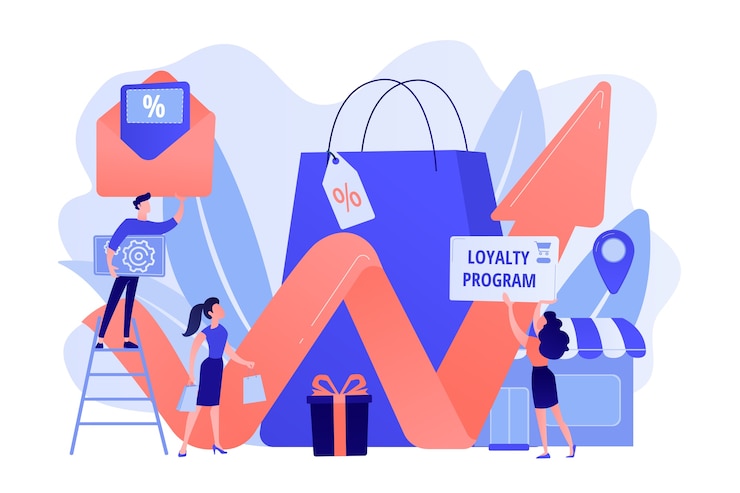
Learn how B2B marketing teams extend customer lifetime value through retention campaigns, expansion programs, and advocacy initiatives that protect and grow revenue from existing customers.
Why Customer Lifetime Value Should Be a Marketing Metric
Customer Lifetime Value (CLV) — the total net revenue a customer generates over the full duration of their relationship with a vendor — is traditionally viewed as a finance or customer success metric rather than a marketing metric. Marketing is measured on new pipeline and MQL volume; CLV is tracked by the CFO and the CS team. This metric ownership gap creates a structural blind spot: marketing investment decisions are made purely on new customer acquisition economics, without accounting for the fact that customers acquired through different channels and programs retain at different rates, expand at different rates, and generate dramatically different lifetime revenue even when their initial contract value is identical. A customer acquired through a high-touch ABM program with thorough pre-sale education may have 2-3x the lifetime value of a customer acquired through a low-touch inbound motion with minimal pre-sale qualification — a difference that changes the ROI calculation for both programs dramatically but is invisible when marketing is measured only on acquisition cost and initial pipeline value.
When marketing teams incorporate CLV into their measurement framework, they make fundamentally different investment decisions. Programs that attract customers who expand, refer, and renew — typically programs that attract well-qualified ICP accounts through high-touch, education-rich demand generation — are prioritized over programs that generate high volume of low-fit customers who churn at 18 months. Content investments that succeed in educating buyers before the sale are recognized for the lower post-sale onboarding costs and higher adoption rates that education-informed buyers produce, not just for the MQL conversion rates they generate. Channel mix decisions incorporate retention data alongside acquisition cost data, producing allocations that optimize for customer quality rather than just contact volume. This CLV-informed marketing strategy consistently produces higher revenue growth per marketing dollar than acquisition-only marketing strategies, particularly as the business matures and customer base size makes retention economics increasingly significant relative to new acquisition.
The Three Marketing Levers for Customer Lifetime Value
Marketing's influence on customer lifetime value operates through three levers: reducing churn (retaining customers who would otherwise leave), driving expansion (growing revenue from existing customers through upsell and cross-sell), and generating referrals (acquiring new customers through existing customer advocacy, which typically produces the highest-quality and lowest-CAC pipeline). Each lever requires different programs, different content, and different measurement approaches — but all three share the common prerequisite of a healthy, engaged customer base that has achieved meaningful value from the product.

Churn reduction is the foundation lever because expansion and referral programs are not viable with customers who are disengaged, have not achieved the promised outcomes, or are actively evaluating alternatives. Marketing's role in churn reduction is primarily through lifecycle communication programs — systematic outreach to customer segments at risk of disengagement that provides relevant content, surfaces available resources and support options, and creates touchpoints that keep the vendor visible and useful to the customer between renewal dates. At-risk customers — those who show engagement drop-off patterns (reduced login frequency, reduced feature usage, reduced email engagement), who have not achieved defined success milestones within expected timeframes, or who are approaching renewal without confirmed stakeholder engagement — should be identified through health scoring models that combine product usage data, support ticket volume, and communication engagement data, and routed into targeted outreach programs before churn is imminent rather than after a renewal conversation reveals the at-risk status.
Expansion marketing reaches existing customers with offers for additional products, upgraded tiers, or additional seats or users. Unlike new business marketing, expansion marketing has the advantage of an established relationship — the customer already trusts the vendor, already uses the product, and has existing context on the vendor's broader capabilities. Expansion marketing programs should be triggered by product usage patterns that indicate expansion readiness: a customer who has consistently used the product at maximum capacity for their current tier is a natural upsell candidate; a customer who has recently achieved a major success milestone is in a psychologically receptive moment for expansion conversation; a customer who has expanded their team or business significantly since the initial purchase has organically created the conditions for additional licensing. Triggered expansion campaigns that reach customers at these specific behavioral moments consistently outperform time-based expansion campaigns that reach customers on a fixed renewal cadence regardless of their readiness signals.
Referral and advocacy programs systematically capture and amplify the word-of-mouth recommendation behavior that most satisfied customers engage in informally. B2B customers who have achieved strong outcomes from a vendor's product are highly motivated to share that experience — both because recommending good solutions is genuinely helpful to their professional community and because vendor recommendations build professional credibility and relationship equity with peers. Referral programs that make it easy for customers to share the vendor (structured referral links, co-authored case studies, introductions to the vendor's team for peer network members) consistently generate the highest-quality leads of any channel, because peer recommendations carry the highest trust of any marketing influence and arrive with a warm introduction that compresses the sales cycle significantly compared to cold pipeline.
Customer Marketing Program Architecture
Building a systematic customer marketing program requires the same infrastructure investment as new customer demand generation: a customer contact database maintained in the CRM or MAP with accurate contact information and segmentation data, a customer lifecycle stage model that tracks where each customer is in their post-purchase journey (onboarding, adoption, expansion-ready, at-risk, advocacy-eligible), behavioral trigger workflows that route customers into appropriate programs based on lifecycle stage and engagement signals, and content assets specifically designed for the post-purchase audience rather than repurposed from pre-sale demand generation content.
The customer lifecycle stage model is the most important structural element of a customer marketing program. It defines, for each stage, what constitutes progress (adoption milestones, usage thresholds, team expansion indicators), what marketing program is appropriate (onboarding sequence for new customers, expansion campaign for adoption-complete customers, re-engagement for at-risk customers), and what success looks like for the marketing program at that stage (reduction in churn rate for at-risk programs, expansion revenue attributed to expansion campaigns, referral volume for advocacy programs). Without a defined lifecycle model, customer marketing programs are ad hoc — reaching all customers with the same content regardless of their stage — which consistently produces weaker results than stage-appropriate, lifecycle-driven programs.
Content for customer marketing differs in tone, specificity, and objective from pre-sale content. Where pre-sale content addresses the prospect's evaluation criteria and purchase decision, post-sale content addresses the customer's implementation, adoption, and expansion decisions. Best-practice content for customer stages includes: onboarding guides and quick-win playbooks for new customers (helping them achieve first value as quickly as possible), advanced feature deep-dives and use case extensions for adoption-complete customers (helping them expand their use of the product beyond the initial use case), and success story features and community engagement invitations for advocacy-eligible customers (recognizing their success and inviting them to share it with peers in a structured way that generates referral opportunity for the vendor).
Measuring Customer Marketing ROI
Customer marketing ROI is measured across three revenue outcome dimensions that correspond to the three levers: churn reduction value (the revenue protected by retention programs — calculated as the revenue from customers who were identified as at-risk and did not churn, minus the estimated churn cost had the program not been in place), expansion revenue (the incremental ARR generated by expansion campaigns, attributed to the specific marketing programs and triggers that preceded the expansion), and referral pipeline (the pipeline and closed revenue from customers referred by existing customers, attributed to the advocacy programs that facilitated the referral).
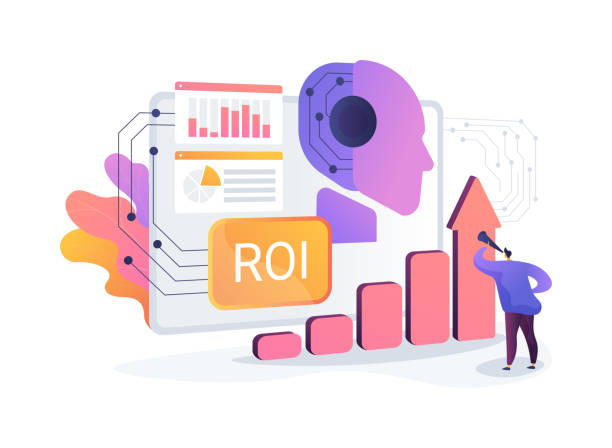
The ROI case for customer marketing investment is typically compelling relative to the ROI of equivalent investment in new customer acquisition. The cost of retaining a customer is substantially lower than the cost of acquiring a new customer to replace them — research from Bain and Company estimates that increasing customer retention rates by 5% increases profits by 25-95% depending on the industry, reflecting the compounding economics of retained revenue that does not need to be re-acquired. Expansion revenue from existing customers has a lower cost of sale than equivalent new business revenue — the customer already trusts the vendor, has established procurement relationships, and requires a shorter sales cycle. Referral pipeline converts at higher rates and at lower CAC than non-referral pipeline. Customer marketing programs that produce measurable results across all three dimensions consistently produce the highest ROI of any marketing investment for companies with a substantial installed customer base.
Net Revenue Retention: The North Star Metric
Net Revenue Retention (NRR) — also called Net Dollar Retention (NDR) — is the metric that most directly captures the combined impact of churn reduction and expansion on customer lifetime value. NRR measures the percentage of beginning-of-period ARR that is retained and grown from existing customers by the end of the period, accounting for churn, downgrades, and expansion: NRR = (Beginning ARR + Expansion ARR - Churned ARR - Downgraded ARR) / Beginning ARR × 100. An NRR above 100% means the business is growing revenue from its existing customer base even without adding any new customers — a fundamentally healthy revenue engine. An NRR below 100% means the existing customer base is shrinking, requiring new customer acquisition to compensate for the loss before any growth can be achieved.
Top-quartile B2B SaaS companies typically achieve NRR of 120-130%+ — meaning their existing customers are growing the business by 20-30% annually through expansion, before any new logo acquisition. This expansion-driven growth is substantially more capital-efficient than acquisition-driven growth because expansion revenue has lower CAC, higher gross margins (no commission on the initial acquisition), and is a more durable revenue signal (existing customers who expand are demonstrating product value realization rather than speculative purchase intent). Marketing's contribution to NRR — through retention programs that protect the denominator and expansion programs that grow the numerator — is directly measurable at the portfolio level and is among the highest-leverage revenue contributions marketing can make for companies with established customer bases.
Integrating Customer Marketing with Customer Success
Customer marketing and customer success share the same objective — maximizing the value customers receive from the product and the revenue those customers generate for the vendor — and produce the best results when they operate as integrated functions rather than as independent teams with separate programs. The CS team has the relationship intelligence and the customer outcome data; the marketing team has the content production capability, the campaign execution infrastructure, and the channel reach to complement the CS team's 1:1 relationship work at scale. The integration points where the two functions create the most value together are: health score-triggered campaigns (marketing executes the at-risk outreach programs that CS identifies as needed but cannot scale through 1:1 outreach alone), expansion opportunity activation (marketing provides the content and campaign infrastructure for expansion outreach at accounts that CS has identified as expansion-ready), and advocacy program management (marketing designs and executes the co-marketing, case study, and referral programs that CS introduces to eligible customers in the relationship).

The data infrastructure for effective CS-marketing integration requires that customer health data — product usage metrics, support ticket volume, stakeholder engagement indicators — is accessible to the marketing team for segmentation and behavioral trigger configuration in the MAP, and that marketing campaign engagement data is visible to CS in the CRM so that CSMs know which customers have received which outreach, what they engaged with, and what behavioral signals they have produced. Organizations where CS and marketing operate from separate data systems without this integration consistently underperform organizations where the data is integrated and the teams can coordinate their touchpoints based on a shared view of each customer's engagement and health status.
Frequently Asked Questions
What is customer lifetime value and how is it calculated?
Customer Lifetime Value (CLV or LTV) is the total net revenue a customer generates over the full duration of their relationship with a vendor. The standard calculation for subscription businesses is: CLV = Average Annual Contract Value × Average Customer Lifetime (in years) × Gross Margin. For example, a customer with $50,000 ACV, a 4-year average lifetime, and 75% gross margin has a CLV of $150,000. A more sophisticated calculation uses cohort-based retention data to project expected lifetime rather than using average tenure, which produces more accurate CLV estimates for companies where retention rates differ significantly across customer segments.
How should we segment customers for customer marketing programs?
The most effective customer segmentation for marketing programs combines lifecycle stage (onboarding, adoption, expansion-ready, at-risk, advocacy-eligible) with product tier and account size. This produces a segmentation matrix where each cell has a distinct content and outreach strategy appropriate for the combination of factors. A large enterprise account in the adoption stage has different content needs than a mid-market account in the same stage; an at-risk enterprise account warrants CS-led intervention with marketing support while an at-risk SMB account may be addressed through automated marketing campaigns without CS escalation. The segmentation complexity should be calibrated to the team's capacity to execute distinct programs for each segment — start with the highest-impact segments (at-risk and expansion-ready) before building programs for every possible combination.
What content works best for customer retention programs?
The highest-impact content for customer retention programs is content that directly helps customers achieve more value from the product: advanced use case documentation, feature adoption guides for underused capabilities, benchmark data showing how comparable customers are using the product and the outcomes they are achieving, and access to the customer community or peer network where customers can share practices and learn from each other. The common mistake is using retention programs to deliver product announcements and company news — content that serves the vendor's communication goals rather than the customer's value realization needs. Customers who are consistently learning new ways to extract value from the product renew at significantly higher rates than customers who primarily receive promotional communications from their vendor.
How do we build a customer referral program that generates B2B pipeline?
Effective B2B customer referral programs combine a structured mechanism for customers to make introductions (a dedicated referral portal, a simple email introduction template, or a direct introduction offer from the CSM) with a recognition and reward component (typically a gift card, account credit, charity donation, or co-marketing opportunity for customers who make referrals that result in closed deals). The most effective B2B referral programs are opt-in rather than mass-incentivized — reaching out specifically to customers who have achieved strong outcomes and have demonstrated positive brand sentiment (high NPS scores, published case study participants, community advocates) rather than incentivizing every customer to refer regardless of their satisfaction level. A referral from a genuinely satisfied customer in the right network is worth dramatically more than a referral from a customer who is referring primarily for the incentive without genuine enthusiasm for the product.
What is the right NRR target for a B2B SaaS company?
NRR targets vary by growth stage and market segment. For early-stage companies (Series A-B), an NRR above 100% indicates that the product is delivering sufficient value for customers to stay and expand — a baseline health signal. For growth-stage companies targeting top-quartile benchmarks, NRR of 110-120% is the target range. For enterprise SaaS companies with large ACV and significant expansion potential, NRR of 120-130%+ is achievable and reflects a best-in-class installed base expansion motion. Companies with NRR below 100% have a fundamental customer success problem that must be addressed before marketing investment in new acquisition is economically rational — each new customer acquired is partially offsetting the revenue being lost from existing customers, requiring a higher acquisition volume to produce net growth than a company with positive NRR.
How do we attribute revenue to customer marketing programs?
Customer marketing revenue attribution follows the same multi-touch logic as new customer attribution but applied to the post-sale journey. Expansion revenue is attributed to the marketing programs that had touchpoints in the 90-180 days preceding an expansion event, using the same influence attribution methodology as pipeline attribution for new business. Referral revenue is attributed directly to the advocacy programs that facilitated the referring customer's introduction, with clear sourcing in the CRM when the referred account is created as a new opportunity. Churn reduction attribution is more complex — it requires estimating the value of customers who were at-risk and did not churn (a counterfactual) — and is most reliably measured through controlled experiments where a random subset of at-risk customers receives the retention program and the control group does not, with churn rates compared between the two groups after the program window.
Key Takeaways
- Customer Lifetime Value should be a key marketing metric.
- Marketing decisions often ignore customer retention and expansion data.
- Churn reduction is essential for successful expansion and referral programs.
- Marketing strategies informed by CLV lead to higher revenue growth.
Frequently Asked Questions
- What is Customer Lifetime Value?
- Customer Lifetime Value is the total net revenue a customer generates during their relationship with a vendor.
- Why should marketing teams focus on CLV?
- Focusing on CLV helps marketing teams make better investment decisions that prioritize customer retention and expansion.
- What are the three marketing levers for CLV?
- The three levers are reducing churn, driving expansion revenue, and generating referrals from existing customers.
- How can marketing reduce churn?
- Marketing can reduce churn through lifecycle communication programs that engage at-risk customers with relevant content and support.
See Where Your Business Stands in Search
Get a free site audit. We identify what is holding you back and what to fix first.
Related Resources
Explore more insights to enhance your digital marketing strategy