Part of the Marketing Attribution Guide
Marketing Attribution: Models, Measurement & Revenue Impact →The Future of Marketing Measurement Isn't Attribution. It's Causality.
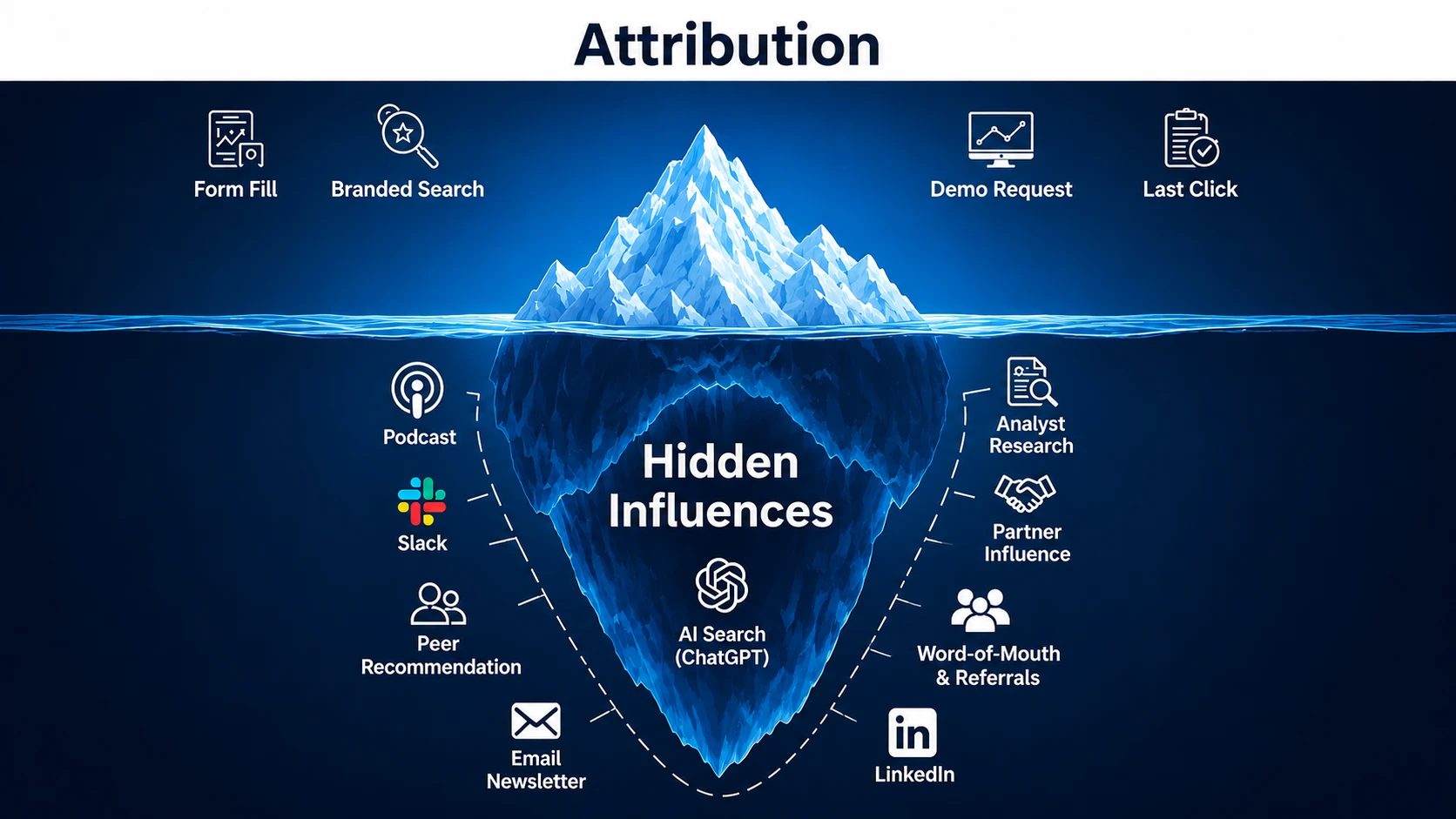
For a decade, attribution has been marketing's gold standard. But as buyer journeys move into AI search, dark social, and private communities, attribution only captures the tip of the iceberg. The organizations that win next will measure causality, not just credit.
For the last decade, marketing attribution has been treated as the ultimate measurement system.
Boards ask for it. CMOs depend on it. Revenue teams optimize around it.
Entire categories of software have been built to answer a single question: which marketing activity gets credit for the conversion?
But I believe we're asking the wrong question.
The future of marketing measurement isn't attribution. It's causality. And the distinction matters more than most marketing leaders realize.
Attribution Was Built for a Different Era
Attribution emerged during a period when customer behavior was highly observable. Buyers clicked ads, visited websites, filled out forms, and downloaded content. Every interaction left a measurable trail.
Attribution models were designed to connect those interactions to business outcomes. The approach worked reasonably well because most of the buyer journey occurred within environments marketers could track.
Today, that world no longer exists.
Modern buyers operate across dozens of channels, communities, devices, and platforms that attribution systems cannot fully observe. The result is a growing gap between what influences buying decisions and what marketing teams can actually measure.
The Industry Is Reaching a Turning Point
Over the past 18 months, a remarkable consensus has begun to emerge among analysts, researchers, and measurement experts. Attribution is still valuable. But attribution alone is no longer sufficient.
Gartner has increasingly encouraged marketing leaders to supplement attribution with incrementality testing, to determine whether marketing activities actually caused business outcomes, or simply received credit for them.
Forrester's measurement research similarly points organizations toward broader frameworks that combine attribution, experimentation, and marketing mix modeling rather than relying on a single methodology.
Academic research examining digital advertising effectiveness in a post-cookie environment is reaching the same conclusion. As privacy restrictions increase and observable signals decline, attribution becomes less reliable as a standalone source of truth.
Different experts may use different terminology. But the direction is clear: the industry is moving beyond attribution-only measurement.
- Gartner Marketing Research
- Forrester Measurement Research
- Measuring Digital Advertising in a Post-Cookie Era, ResearchGate
The Attribution Problem Nobody Wants to Talk About
The challenge isn't that attribution is wrong. The challenge is that attribution only measures what it can see.
Consider a modern B2B buying journey:
- A marketing leader hears about your company on a podcast.
- A colleague mentions your platform during a planning meeting.
- An analyst includes your category in a research note.
- Someone shares your content in a private Slack community.
- The buyer asks ChatGPT about potential vendors.
- Weeks later, they search for your brand name and request a demo.
Which interaction receives credit? Most attribution systems will assign credit to the branded search or the demo request. Yet neither event created the demand. The demand already existed. The attribution system simply observed the final measurable interaction.
This is the challenge facing every marketing leader today: we increasingly measure what is visible instead of what is influential.
The Attribution Gap Is Growing
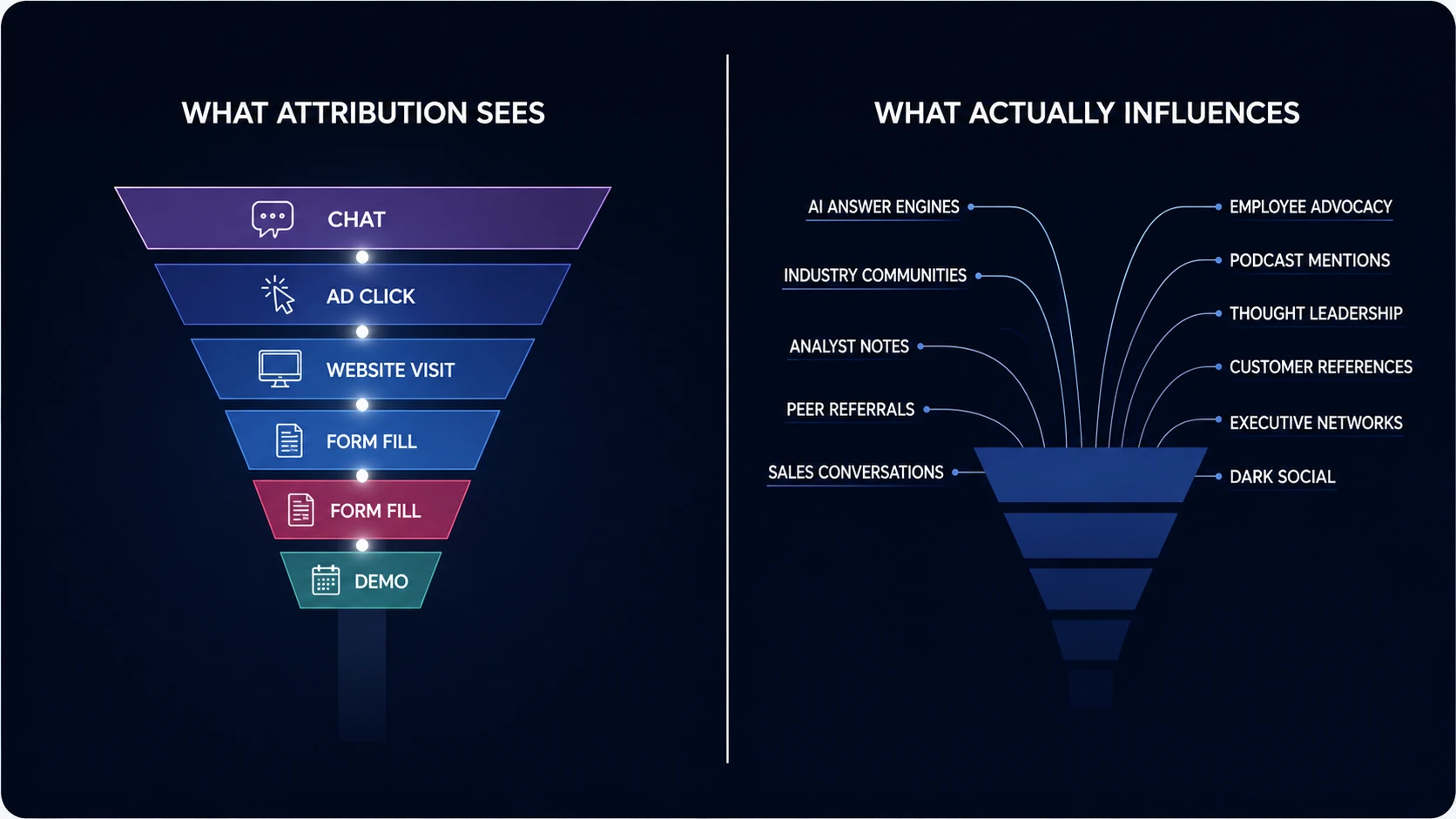
At RankWorks, we describe this challenge as the Attribution Gap, the difference between what influenced a buying decision and what attribution systems can actually observe. And that gap is expanding rapidly.
Buyers are conducting research through AI-generated answers. They are seeking recommendations from peers. They are participating in private communities. They are influenced by partners, analysts, executive networks, podcasts, referrals, and word of mouth.
Most of these interactions never appear in attribution reports. Yet they often determine which vendors make the shortlist long before a prospect fills out a form. The more complex the buying journey becomes, the larger the Attribution Gap grows.
The Rise of First-Party Data

As third-party cookies disappear, privacy regulations expand, and platforms limit access to user-level data, one trend has become increasingly clear: first-party data is becoming the most valuable asset in marketing measurement.
For years, marketers relied on external identifiers, cross-site tracking, and platform-level attribution to understand buyer behavior. Those signals are becoming less available and less reliable.
The organizations adapting most successfully are investing in data they own:
- CRM and pipeline data
- Revenue and customer engagement data
- Product usage data
- Website interactions and account-level activity
Attribution may tell you which touchpoints received credit. But first-party data helps validate whether those touchpoints actually contributed to pipeline, revenue, and growth.
Attribution Answers the Wrong Question
The challenge isn't that attribution is wrong. The challenge is that attribution only measures what it can see, and the invisible portions of the buyer journey are growing.
Attribution is excellent at answering: which touchpoints influenced a conversion?
But executives increasingly care about a different question: what actually caused growth?
Those are not the same thing. A channel may receive attribution credit without creating incremental demand. A campaign may appear successful in an attribution report while having little impact on overall business performance. Conversely, a marketing initiative may significantly influence future revenue while receiving little measurable attribution credit.
Attribution measures correlation. Growth requires understanding causation.
The New Measurement Framework
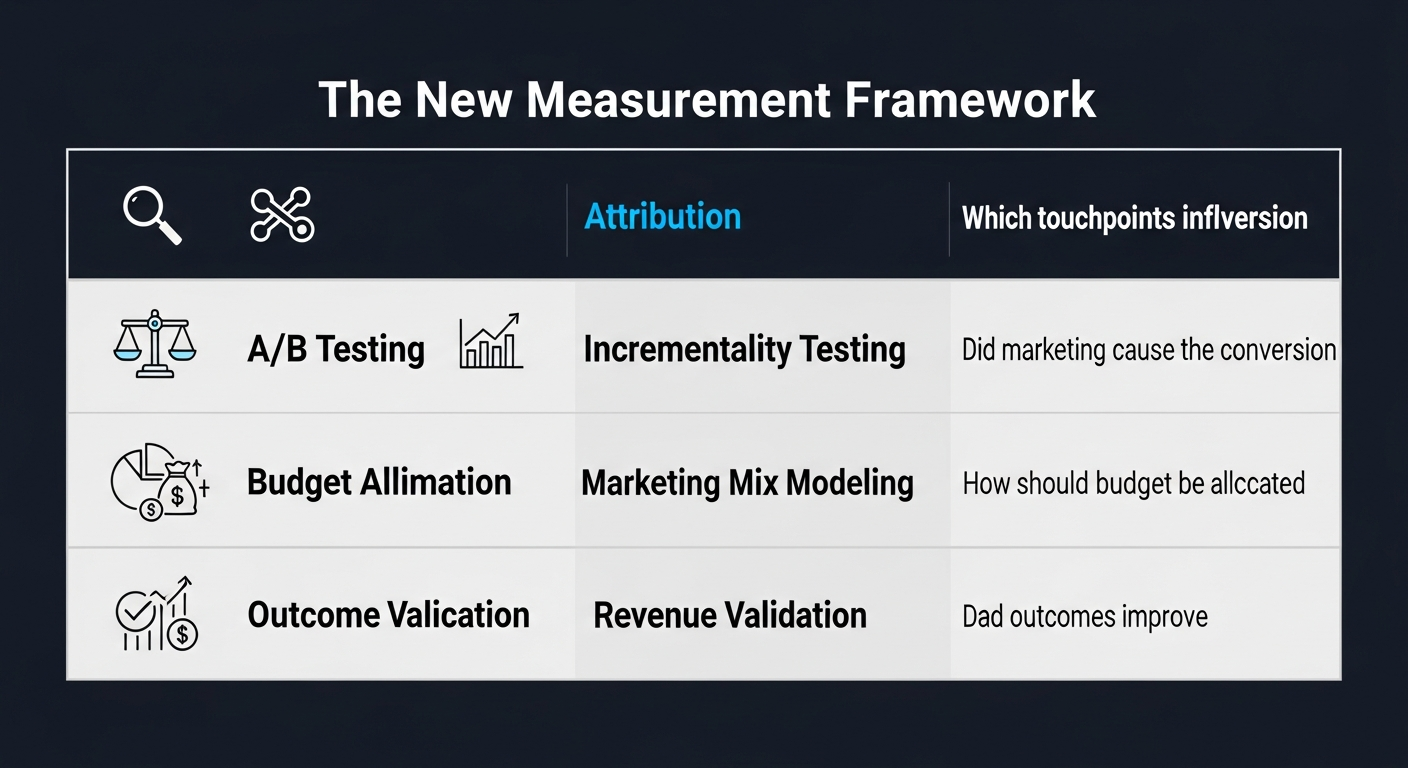
The organizations leading the next generation of marketing measurement are combining multiple methodologies rather than searching for a perfect attribution model. Each approach answers a different business question:
| Business Question | Best Measurement Method |
|---|---|
| Which touchpoints influenced conversion? | Attribution |
| Did marketing actually cause the conversion? | Incrementality Testing |
| How should budget be allocated? | Marketing Mix Modeling (MMM) |
| Did revenue outcomes improve? | CRM & Revenue Validation |
| What should we optimize next? | Attribution + Testing |
This is an important shift. The future isn't replacing attribution. The future is putting attribution in its proper place, one signal among many.
Why This Matters Even More for B2B SaaS
The limitations of attribution become even more apparent in B2B environments. Unlike ecommerce purchases, B2B buying decisions involve:
- Long sales cycles with multiple stakeholders
- Independent research and executive influence
- Analyst and partner ecosystems
- Referrals, dark social interactions, and AI-assisted discovery
Most of these influences are difficult, or impossible, to attribute accurately. Yet they play a critical role in pipeline creation and revenue growth.
This is why many B2B marketing leaders find themselves staring at attribution reports that look precise but fail to explain actual business outcomes. The report answers who received credit. The business needs to understand what created demand.
The Future Is Causality
Attribution tells us where credit was assigned. Causality helps us understand what actually drove the outcome. That's a profound difference.
Marketing measurement is entering a new era. For years, the industry's goal was attribution. Today, the goal is causality.
As privacy regulations increase, AI reshapes discovery, and buyer journeys become less observable, the organizations that win will not be those with the most sophisticated attribution models. They will be the organizations that build complete measurement systems, combining attribution, experimentation, modeling, visibility, and revenue intelligence.
Because growth is not created by a single touchpoint. Growth is created by a collection of influences working together over time.
What Marketing Leaders Should Do Next
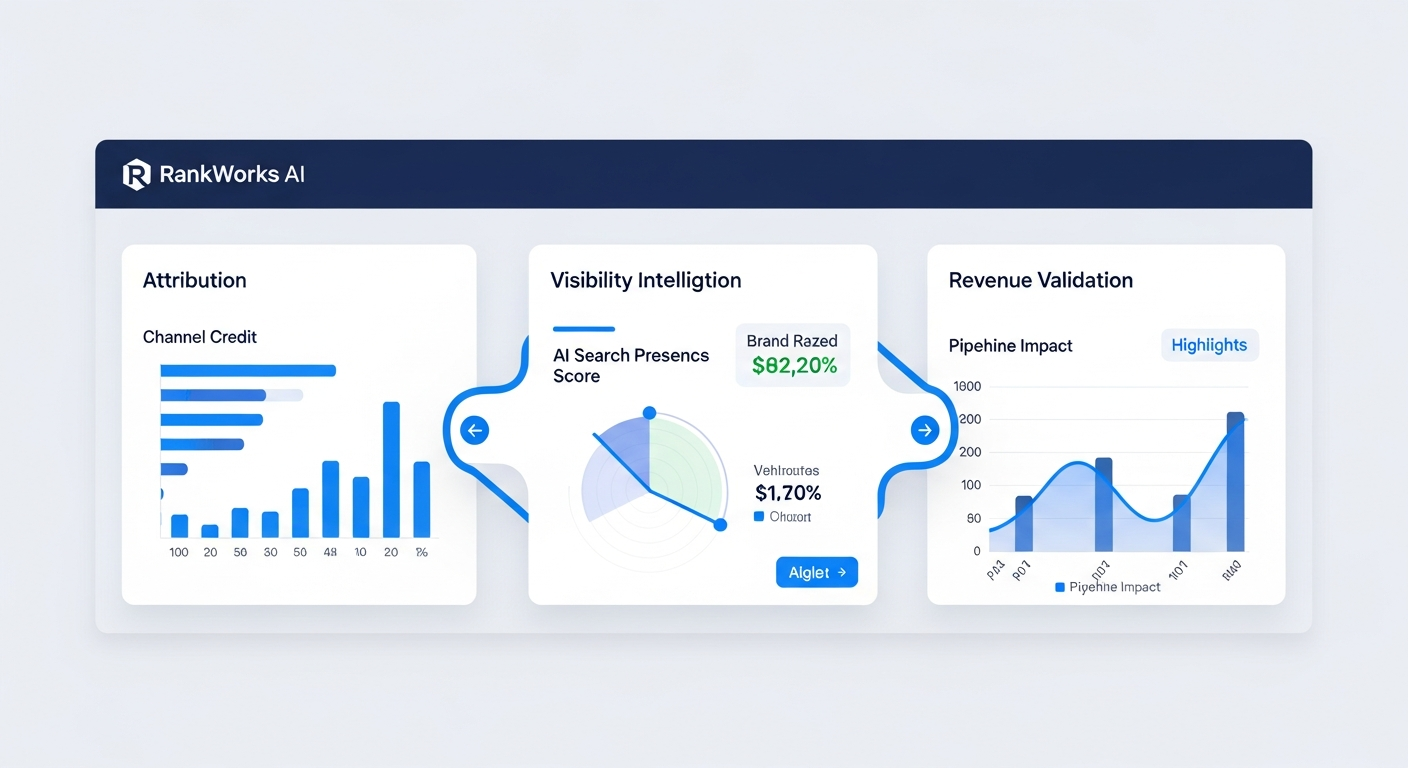
The goal is not to abandon attribution. The goal is to stop treating attribution as the source of truth.
Start by evaluating your current measurement framework. Ask yourself:
- Are we measuring influence or simply assigning credit?
- Can we distinguish correlation from causation?
- Do we understand which channels create demand versus capture demand?
- Are we measuring visibility in AI search and emerging discovery channels?
- Can we connect marketing activities to actual revenue outcomes?
If the answer is no, your organization may have more attribution than insight.
Modern marketing measurement should combine:
- Attribution, to understand touchpoint influence
- Incrementality Testing, to validate causation, not just correlation
- Marketing Mix Modeling, to guide budget allocation with confidence
- Revenue Validation, to connect marketing activity to actual outcomes
Together, these approaches provide a more complete understanding of what actually drives growth. The next generation of marketing leaders will not be defined by how well they report on attribution. They will be defined by how well they understand what actually drives growth.
And that is ultimately the future of marketing measurement.
Explore the RankWorks Attribution Framework
Key Takeaways
- Attribution models only capture visible interactions in the buyer journey.
- Causality is becoming more important than attribution in marketing measurement.
- The Attribution Gap is growing as buyers use multiple channels and sources.
- First-party data is becoming essential as third-party signals decline.
Frequently Asked Questions
- What is the main argument about marketing measurement?
- The main argument is that causality should replace attribution as the primary measurement system. Attribution only measures what is visible, while causality seeks to understand the true influences behind buying decisions.
- Why is attribution no longer sufficient?
- Attribution is no longer sufficient because modern buyers interact across many channels that attribution systems cannot fully observe. This leads to a gap between what influences decisions and what can be measured.
- What is the Attribution Gap?
- The Attribution Gap refers to the growing distance between what influences a buying decision and what attribution systems can observe. As buyers engage in more complex interactions, this gap continues to expand.
- How should marketing leaders adapt to these changes?
- Marketing leaders should supplement attribution with incrementality testing and broader measurement frameworks. This approach will provide a more comprehensive understanding of marketing effectiveness in a changing environment.
See Where Your Business Stands in Search
Get a free site audit. We identify what is holding you back and what to fix first.
Related Resources
Explore more insights to enhance your digital marketing strategy
Revenue Attribution Platform
Connect every marketing dollar to closed revenue. Multi-touch attribution, incrementality testing, and board-ready reporting in one place.
Revenue Attribution: Models, Measurement & Revenue
Every attribution model explained — from first-touch to data-driven — with a framework for choosing the right one for your pipeline.
See It Run on Your Pipeline
Book a demo and see the unified measurement framework applied to your own revenue data. No slide decks — just your numbers.