AI Search Visibility: Showing Up in AI-Generated Answers

Learn how to get your brand cited in AI-generated answers across ChatGPT, Perplexity, Google AI Overviews, and other LLM-powered search surfaces — with practical content and technical strategies.
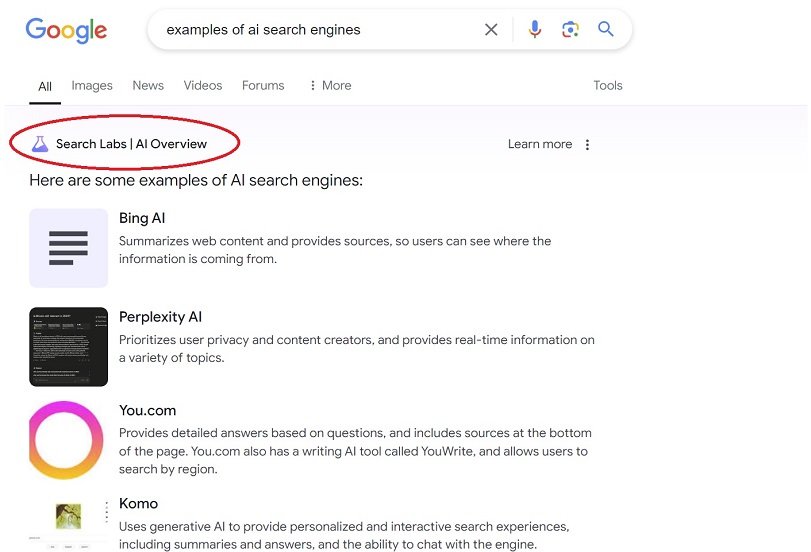
The way buyers find information is changing faster than most marketing teams are adapting to it. A prospect researching a B2B software category in 2024 might have started with a Google search and clicked through to vendor websites, review sites, and comparison pages. The same prospect in 2026 is increasingly likely to start with a prompt in ChatGPT, Perplexity, or Google's AI Overviews — and receive a synthesized answer that names two or three vendors without requiring a single click to an external website.
This shift has significant implications for brand visibility. In traditional search, visibility is determined by ranking position on a results page — and while clicks have always been unequally distributed, every result above the fold had a meaningful chance of being noticed. In AI-generated answers, visibility is binary: the AI either cites your brand and content as a source, or it does not. There is no page two for AI answers. There is no fifth position that occasionally gets a click. Either your brand is part of the answer, or it is invisible.
AI search visibility — the practice of optimizing your brand's presence in AI-generated answers across multiple large language model surfaces — is now a distinct, important marketing discipline that requires strategies and measurement approaches different from traditional SEO. This guide covers what determines AI citation behavior, the content and technical approaches that improve AI visibility, how to measure performance in this new environment, and how to think about AI search in the context of a broader demand generation strategy.
How AI Systems Decide What to Cite
Large language models that power AI search systems — ChatGPT with web browsing, Perplexity, Google Gemini and AI Overviews, Microsoft Copilot — generate answers by synthesizing information from training data and, in many cases, real-time web retrieval. Understanding which signals influence citation behavior is the foundation for AI visibility strategy.
The research on LLM citation behavior is still emerging, but several patterns have been documented consistently by content marketers and SEO researchers who have studied the question systematically:
Domain authority and existing trust signals remain relevant. Sites that are well-established, frequently linked to by authoritative sources, and consistently indexed by search engines are more likely to be retrieved and cited by AI systems with web retrieval capabilities. The domain authority signals that matter for traditional SEO — quality inbound links, consistent content publishing, strong E-E-A-T (Experience, Expertise, Authoritativeness, Trustworthiness) indicators — also matter for AI visibility, though their relative weight differs from traditional ranking algorithms.
Content that directly answers specific questions performs better. AI systems optimized to answer user queries tend to retrieve and cite content that is structured around answering questions clearly and completely. Content that buries the key answer in 800 words of preamble is less likely to be retrieved and cited than content with a clear direct answer near the top, followed by supporting context. This favors FAQ formats, structured explainers with strong topic sentences, and content that matches the specific query formats buyers actually use.
Being mentioned in third-party review and comparison content matters. Perplexity, ChatGPT, and similar AI systems frequently retrieve content from G2, Capterra, TrustRadius, Reddit, and other third-party sources when answering category and comparison queries. A brand that is well-represented on these platforms — with reviews, comparison mentions, and community discussion — is more likely to appear in AI-generated answers about the category than a brand with limited third-party presence regardless of how well-optimized its own website is.
Structured data and clear entity definition improve machine readability. Schema markup, especially Organization schema, Product schema, and FAQ schema, helps AI systems correctly identify and understand what a brand does, who it serves, and what claims it makes about its capabilities. Brands with well-structured schema markup are more reliably represented in AI-generated answers because the LLM has more unambiguous information to draw from.
Content Strategies That Drive AI Citation
The content approaches most consistently associated with AI citation share several characteristics:

Category-defining thought leadership. AI systems are trained to identify authoritative sources on a given topic. Content that establishes a brand as a genuine authority on a category — not by claiming authority but by demonstrating it through depth, specificity, and accuracy — is more likely to be cited in AI-generated answers about that category. This means publishing content that goes substantially deeper than the typical vendor blog post: primary research, detailed analytical frameworks, content that cites credible third-party sources and provides genuinely useful methodology, not just marketing-oriented feature lists dressed as thought leadership.
Definitional content for important terms and concepts. AI systems frequently retrieve definitional content when answering questions about what a term means or how a concept works. Content that clearly defines key terms in your category — ideally with examples, nuance, and genuine expert perspective — is well-suited for AI retrieval. This is the same logic behind creating "what is X" and "how does X work" content for traditional SEO, applied to AI retrieval optimization.
Comparison and evaluation content. B2B buyers asking AI systems questions about vendor selection often phrase queries as comparisons: "what are the differences between X and Y," "how do I evaluate Z category solutions," "which tools are best for W use case." Content that honestly addresses these comparison questions — including acknowledging where competitors have strengths — tends to perform better in AI retrieval than content that avoids comparison and focuses solely on self-promotion.
Specific, credible statistics and data. AI systems frequently cite content that contains specific statistics, research findings, or quantitative claims — particularly when those statistics are attributed to credible sources or represent the brand's own original research. Original research content (surveys, industry benchmarks, analysis of proprietary data) is particularly valuable for AI citation because it contains unique data that AI systems cannot synthesize from other sources.
Technical Optimization for AI Visibility
Beyond content strategy, several technical elements affect how reliably AI systems can find, index, and cite your content:
Ensure comprehensive search engine indexing. AI systems with web retrieval capabilities typically index content through the same or similar mechanisms as traditional search engines. Content that is blocked from crawling, loaded via client-side JavaScript that crawlers cannot render, or buried behind login walls is less likely to be retrieved and cited. Auditing your crawlability and indexability — ensuring your most important content is fully accessible to web crawlers — is the foundational technical step for AI visibility.
Implement FAQ schema on content with question-and-answer format. FAQ schema markup makes the question-answer structure of your content machine-readable in a way that LLMs can parse efficiently. Content marked up with FAQ schema is more reliably retrieved in response to question-format queries because the markup signals to the AI that this content contains direct answers to specific questions.
Build a strong entity graph. Entities in the knowledge graph context are clearly defined, distinguishable things — your brand, your founders, your product, your category. Ensuring that these entities are well-represented and consistently described across your website, your Google Business Profile, your Wikipedia or Wikidata presence (if applicable), your LinkedIn company page, and major industry directories helps AI systems correctly identify and represent your brand in generated answers.
Maintain consistent brand representation across platforms. AI systems retrieve and synthesize information from many sources. Inconsistent information about your brand across sources — different descriptions, different founding dates, different claims about company size or customer count — can result in AI systems generating inaccurate or internally contradictory information about your brand. Auditing your brand representation across your website, social profiles, review sites, press coverage, and directory listings for consistency reduces this risk.
Measuring AI Search Visibility
Measuring performance in AI-generated answers is harder than measuring traditional search visibility because there is no direct equivalent of Google Search Console for AI systems. Several approaches have emerged:

Manual prompt testing. Regular testing of key queries relevant to your brand and category across ChatGPT, Perplexity, Google AI Overviews, and Microsoft Copilot gives qualitative signal about whether and how your brand is being cited. Documenting these results over time — which prompts generate citations, what context your brand appears in, what competitors are consistently cited alongside you — provides a directional picture of your AI visibility trajectory. This is time-intensive to do comprehensively but can be structured around the 20-30 most important queries for your category.
Third-party AI visibility monitoring tools. A small category of tools has emerged specifically to monitor brand visibility in AI-generated answers: Profound (AI search monitoring), Peec.ai, and Goodie.ai all offer some form of systematic AI citation tracking. These tools automate the prompt testing process and provide trend data over time, but the category is early and their coverage and methodology vary significantly.
Self-reported attribution on forms. As AI-influenced discovery becomes more common, "How did you first hear about us?" fields on forms increasingly capture responses like "ChatGPT" or "AI search" as source options. Adding these options and tracking the trend in self-reported AI discovery gives a direct signal of AI search's contribution to awareness and lead generation — a signal that tracking-based attribution cannot provide for prompts that do not generate clicks.
AI Search in the Context of Broader Demand Generation
AI search visibility should be understood as one component of a broader brand visibility strategy, not a replacement for traditional SEO or demand generation. The relationship between AI-generated answers and traditional search results is still evolving — Google's AI Overviews have changed the click-through dynamics of organic search without eliminating it, and Perplexity's research on citation behavior suggests that AI-generated answers do drive meaningful click-through to cited sources in many cases.
The most defensible approach for B2B marketing teams is to build content that is genuinely useful, technically sound, and well-represented across multiple surfaces — including traditional search, AI-generated answers, social platforms, and third-party review sites — rather than optimizing specifically for any single surface. Content that earns AI citation because it is the best, most authoritative, most clearly structured answer to a question is also likely to rank well in traditional search, generate social sharing, and earn third-party coverage. The AI visibility strategy that works sustainably is not a set of tricks to game AI systems; it is a commitment to content quality and brand representation that earns the trust signals AI systems rely on.
The brands that will earn disproportionate AI search visibility over the next two to three years are not those that find the right technical tricks to game AI retrieval algorithms. They are the brands that have invested consistently in being genuinely authoritative in their category — publishing research, producing accurate expert content, earning coverage in credible third-party sources, and maintaining brand consistency across every surface where AI systems look for information. AI visibility optimization, done correctly, is indistinguishable from brand authority building. The content and technical investments compound over time, producing compounding visibility that is harder for competitors to replicate than any tactic optimized for a specific algorithm.
Frequently Asked Questions
How is AI search visibility different from traditional SEO?
Traditional SEO optimizes for ranking position in a list of results, where users choose which result to click. AI search visibility optimizes for citation in a synthesized answer, where the AI makes the choice about what to include. The underlying signals — domain authority, content quality, E-E-A-T — overlap significantly, but the specific content structures, the importance of third-party presence, and the measurement approaches are distinct. Traditional SEO also has established measurement infrastructure (Search Console, Ahrefs, Semrush); AI search visibility measurement is nascent and significantly less precise.
Does being cited in AI-generated answers drive meaningful traffic and leads?
The evidence is mixed and evolving. Perplexity citations appear to drive meaningful click-through to cited sources in some research. Google AI Overviews citations have been shown in some studies to increase click-through rates compared to non-cited results at the same ranking position. ChatGPT citations with web browsing enabled generate less predictable click-through because the AI interface reduces friction to follow-up questions within the conversation rather than clicking out. The practical answer for most B2B brands is that AI citation drives meaningful brand impression value even when it does not drive immediate clicks — being consistently cited as an authority in your category influences buyer consideration, even when the immediate path to conversion is not a click from the AI answer.
How quickly can we improve our AI search visibility?
AI visibility improvement operates on a longer timeline than some traditional SEO tactics. Building the content depth, domain authority, and third-party presence that influences AI citation is a months-long investment, not a weeks-long one. Technical changes — implementing schema markup, fixing crawlability issues — can have faster impact. But the content authority signals that most reliably influence AI citation build over time as content accumulates, earns links, and is consistently retrieved and cited by AI systems. Teams expecting rapid results from AI visibility optimization are likely to be disappointed; teams treating it as a 12-24 month brand authority investment are more likely to see the compounding returns that the strategy requires.
Which AI systems should we prioritize for visibility optimization?
As of mid-2026, the highest-priority surfaces for B2B AI visibility are Google AI Overviews (because of Google's market share in search, its Overviews appear for a significant percentage of informational queries that B2B buyers use), Perplexity (which has grown substantially in B2B research use cases and has transparent citation behavior), and ChatGPT with web browsing (because of its large user base and increasingly common use for research and vendor evaluation). Microsoft Copilot (integrated into Microsoft 365) is relevant for organizations whose target buyers heavily use Microsoft tools. The relative importance of these surfaces is changing rapidly, and monitoring which surfaces are driving self-reported discovery in your form data is the most reliable way to calibrate priority.
Should we create specific content for AI search or optimize existing content?
Both, but prioritize optimizing existing content first. Auditing your existing content for AI-readiness — clear question-and-answer structure, FAQ schema markup, direct answers near the top of articles, consistent entity representation — typically produces faster improvements than creating entirely new content. Once the existing content library is optimized, creating new content specifically designed for AI retrieval (deep category guides, original research, definitional content for important terms) builds the long-term authority base that sustains AI visibility at scale.
How do we handle incorrect or unfair representation in AI-generated answers?
AI systems can generate inaccurate or outdated information about brands — incorrect pricing, outdated feature descriptions, misattributed capabilities. The primary levers for correcting this are: updating your website content and structured data to accurately represent current information (which improves the accuracy of retrieved content), publishing corrections on your own properties and ensuring they are indexed (which gives AI systems more recent accurate information to draw from), and in some cases reaching out to AI providers who offer mechanisms for reporting factually incorrect content. The process is slower and less direct than traditional content correction because you are not correcting the AI system directly but improving the source content it retrieves from.
Key Takeaways
- Buyers increasingly use AI prompts for information instead of traditional searches.
- AI visibility is binary; brands are either cited or invisible in AI answers.
- Domain authority and trust signals influence AI citation behavior.
- Structured content and schema markup improve AI visibility and citation chances.
Frequently Asked Questions
- How is AI search visibility different from traditional SEO?
- AI search visibility focuses on being cited in AI-generated answers, unlike traditional SEO which emphasizes ranking positions. In AI searches, brands either appear in the answer or do not appear at all.
- What factors influence whether a brand is cited by AI systems?
- Factors include domain authority, content quality, and the presence of structured data. Brands with strong trust signals and clear, direct answers are more likely to be cited.
- Why is content structure important for AI citation?
- Content that answers specific questions clearly is favored by AI systems. Clear answers positioned at the top of the content improve the chances of being cited.
- How can brands improve their chances of being mentioned in AI-generated answers?
- Brands should focus on building domain authority, creating high-quality content, and using structured data. Engaging with third-party review platforms also enhances visibility in AI responses.
See Where Your Business Stands in Search
Get a free site audit. We identify what is holding you back and what to fix first.
Related Resources
Explore more insights to enhance your digital marketing strategy
B2B Demand Generation: Building a Pipeline Engine That Scales
A practical guide to building and optimising demand gen programs that consistently fill the top of funnel with qualified pipeline.
Revenue Attribution Platform
See exactly which campaigns, channels, and plays drive closed revenue — not just leads. Multi-touch attribution built for B2B revenue teams.
See RankWorks in Action
Book a 30-minute demo and see how leading B2B marketing teams connect demand programs to pipeline and revenue.