Lifecycle Marketing: Defining and Moving Stages
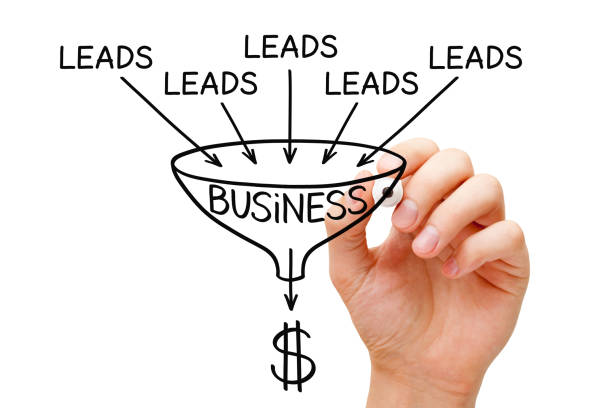
Build a B2B lifecycle marketing system that reliably moves contacts from subscriber to customer — with clear stage definitions, transition criteria, and the programs that advance buyers at each stage.
Lifecycle marketing is the practice of treating the full buyer and customer journey as a structured system — one with defined stages, explicit criteria for moving between them, and deliberate programs designed to advance contacts through each transition. In B2B, this system spans from a contact's first brand interaction all the way through retention, expansion, and renewal — a journey that unfolds over months or years and involves multiple stakeholders at each stage.
Most B2B organizations have the concept of a funnel. Fewer have a lifecycle marketing system that actually works as designed. The gap appears at the transition points: MQL definitions that sales and marketing have never formally agreed on, handoffs that happen informally with inconsistent context, and nurturing programs that run on autopilot without defined exit criteria tied to stage advancement. The funnel exists in slide decks but not in operational reality.
Building lifecycle marketing that works in operational reality requires getting four things right: clear stage definitions with explicit criteria, programs designed to advance contacts at each stage, the technical infrastructure that tracks stage changes and triggers the right programs, and regular measurement of stage conversion rates that drives ongoing optimization.
Defining the Lifecycle Stages for B2B
The lifecycle stage model most commonly used in B2B marketing operations has six to eight stages, depending on how the organization's go-to-market motion is structured. A standard model looks like this:
Subscriber: A contact who has opted into marketing communications but has not demonstrated active interest in a specific solution. Newsletter subscribers, event registrants who have not engaged with product content, and contacts added from co-marketing programs typically start here. The marketing goal at this stage is awareness and education — building familiarity with the brand and category before attempting to identify purchase intent.
Lead: A contact who has engaged with content or taken an action that indicates interest beyond passive brand awareness — a content download, a webinar attendance, an inbound inquiry through a general contact form. Not yet qualified, but showing enough signal to warrant monitoring and continued nurturing.
Marketing Qualified Lead (MQL): A contact who has met the defined threshold for marketing qualification — typically a combination of firmographic fit score and behavioral engagement score that together indicate sufficient readiness for sales awareness. The specific MQL threshold should be documented and agreed upon by both marketing and sales, not decided unilaterally by either function.
Sales Accepted Lead (SAL): An MQL that a sales representative has reviewed and accepted as worth pursuing. This stage exists to create an accountability checkpoint between marketing's qualification judgment and sales' qualification judgment. If a sales rep rejects an MQL without giving a reason, that is not useful feedback. If they accept it into SAL status, they are committing to follow up within the SLA. This stage makes the handoff process explicit and measurable.
Sales Qualified Lead (SQL): A contact at an account where an active opportunity has been created. At this stage, sales has confirmed that there is a real buying need, a meaningful decision timeline, and sufficient budget and authority to make a purchase decision. The contact moves from the marketing lifecycle into the sales pipeline as an active opportunity.
Customer: A closed-won account. At this stage, the lifecycle motion transitions from acquisition to retention and expansion — CS takes primary ownership, with marketing contributing through customer marketing programs designed to deepen adoption, expand use cases, and generate referrals and references.
Expansion candidate: An existing customer who has demonstrated signals of expansion readiness — adding users, adopting new features, reaching usage thresholds that indicate they are underserved by their current tier. Many lifecycle models add this stage to explicitly trigger expansion programs rather than leaving expansion to ad-hoc CS conversations.
Stage Transition Criteria: The Operational Detail That Actually Matters
Stage definitions without explicit transition criteria are aspiration, not process. Each stage transition needs a defined set of conditions that must be true for the contact or account to advance — conditions that can be evaluated programmatically by the MAP or CRM, not conditions that require manual human judgment for every record.
The MQL transition is the most important to get right because it is the highest-volume handoff between marketing and sales. A well-defined MQL transition might specify: the contact's firmographic fit score must be 60 or above (out of 100), and their behavioral engagement score must be 40 or above, and the contact must be at a company with 50 or more employees, and the contact must not have been previously disqualified in the last 90 days. Every element of this definition is binary and evaluatable — the contact either meets the criteria or does not, and the system can enforce the transition without human review.
Weak transition criteria look like: "the contact is engaged and seems interested." This is not a criterion — it is a description that requires individual judgment to apply, which means it will be applied differently by different people and produce inconsistent data.
Programs That Drive Stage Advancement
Each lifecycle stage requires programs specifically designed to advance contacts to the next stage — not generic campaigns that happen to reach contacts at that stage, but deliberate programs built around the question "what does this contact need to experience to be ready for the next stage?"
Subscriber to Lead: Educational content that introduces the problem your product solves and the category of solution, delivered at a frequency and through channels calibrated to maintain engagement without overwhelming. The goal is to convert passive brand awareness into active interest in the solution category.
Lead to MQL: Product-adjacent content — case studies, product-focused webinars, ROI frameworks, comparison guides — that moves the contact from category interest to vendor evaluation. This is the stage where behavioral scoring becomes most important: the signals that indicate the contact is actively researching a solution, not just passively consuming content.
MQL to SQL: This transition is driven by sales follow-up, not marketing programs — but marketing influences it through the quality of the handoff context. A well-executed handoff that gives the sales rep everything they need to have a relevant first conversation improves the SAL-to-SQL conversion rate more than any additional nurturing touch.
Customer to Expansion candidate: Customer marketing programs — product education series, use case spotlights, community engagement, customer advisory boards — that deepen adoption and surface expansion signals. The programs that work at this stage look nothing like acquisition nurturing and require content built specifically for existing customers with existing context.
A Real Example: Marketo's Lifecycle Model in Practice
Marketo (now Adobe Marketo Engage) has documented its own lifecycle marketing implementation extensively in published thought leadership and case studies. Their model, which they call the "Definitive Guide to Marketing Metrics and Analytics," defines lifecycle stages with explicit numerical scoring thresholds: a contact becomes an MQL when their combined fit and behavioral score exceeds a defined threshold (specific numbers vary by implementation), becomes an SAL when a sales rep accepts the lead within a defined SLA, and becomes an SQL when an opportunity is created in Salesforce.
The key operational discipline Marketo emphasizes — and which their own internal marketing team applies — is measurement at every transition: MQL volume and conversion rate, SAL acceptance rate and average response time, SQL conversion rate, and pipeline velocity from SQL to closed-won. Each metric surfaces a different optimization opportunity. A low SAL acceptance rate indicates an MQL qualification problem — marketing is passing leads sales considers unready. A low SAL-to-SQL rate indicates a sales process problem — reps are accepting leads but not converting them to opportunities. Each metric diagnosis leads to a different fix.
Measuring and Optimizing Lifecycle Performance
Lifecycle marketing generates meaningful data only when stage transitions are tracked consistently in the CRM and MAP. The measurement system that makes optimization possible tracks four metrics for each stage transition:
Conversion rate: What percentage of contacts at stage N advance to stage N+1? This is the fundamental health metric for each transition.
Time in stage: How long does the average contact spend at each stage before advancing or stalling? Unusually long time-in-stage indicates friction at that transition that is slowing the overall lifecycle velocity.
Volume: How many contacts are currently at each stage, and how has that volume changed over time? Stage volume relative to pipeline targets tells you whether the top of the lifecycle is generating enough activity to hit downstream revenue goals.
Regression rate: How often do contacts move backward — from MQL back to Lead, for example, because they failed the qualification criteria? High regression rates indicate a qualification problem upstream that is creating churn at the handoff point.
Integrating Lifecycle Data Into Revenue Forecasting
A mature lifecycle marketing system generates data that is useful far beyond marketing operations — it contributes directly to revenue forecasting accuracy. When stage conversion rates are stable and well-understood, the volume of contacts at each upstream stage becomes a reliable leading indicator of future pipeline and revenue.

If your organization consistently converts 35% of MQLs to SQLs, and 28% of SQLs to closed-won opportunities with an average deal size of $42,000 and a 90-day average cycle length, then the number of MQLs created this month gives you a probabilistic revenue forecast for 90-120 days from now. A marketing team that generated 480 MQLs this month, at the above conversion rates, is expecting to contribute approximately $1.76M in closed revenue within four months — a projection that can be presented to finance and revenue leadership with the conversion rate assumptions made explicit.
This kind of lifecycle-to-revenue forecasting is only possible when stage definitions are consistent, transition criteria are enforced programmatically, and stage history is preserved in the CRM. Teams that have built this infrastructure consistently report that their ability to forecast marketing's revenue contribution quarterly — not just report it after the fact — materially changes the organizational conversation about marketing's role in the business. Moving from "we will report what we generated last quarter" to "we can forecast what we will generate next quarter based on current pipeline stage data" is the credibility shift that drives long-term budget investment and organizational influence for marketing leadership.
The lifecycle marketing system, at its best, becomes the operational backbone of a B2B go-to-market organization — the shared framework that marketing, sales, and customer success use to describe where a contact or account is in their journey and what the organization should do next to advance them. Building that system requires initial investment and ongoing maintenance, but the compound return — consistent handoffs, reliable conversion data, evidence-based program optimization, and a forecasting capability built on stage progression data — is among the highest-leverage operational investments a B2B revenue organization can make.
Lifecycle marketing is ultimately a commitment to treating the buyer as the organizing principle of go-to-market operations — building every program, metric, and process around advancing the buyer through their journey rather than around the internal organizational structures of the functions serving them. That commitment, made explicit through documented stages, enforced transition criteria, and deliberate stage-advancement programs, is what transforms a funnel from a diagram into an operational system that reliably produces pipeline and revenue.
Frequently Asked Questions
How many lifecycle stages is the right number?
Six to eight stages is the most common range for B2B organizations with separate marketing and sales qualification steps. Fewer than five stages typically lacks the resolution to identify where specific transition problems are occurring — a four-stage model that collapses MQL, SAL, and SQL into a single "qualified" stage cannot tell you whether the problem is marketing qualification, sales acceptance, or opportunity creation. More than eight stages adds administrative complexity without adding analytical value for most organizations. The right number is the minimum that gives you the transition visibility you need to diagnose and fix problems.
How do we get sales to use the lifecycle stage framework consistently?
Adoption requires three things: the lifecycle stages must be embedded in the CRM as a required field, not an optional one; stage transitions must trigger relevant CRM views and notifications that sales actually uses in their daily workflow; and sales leadership must hold reps accountable to stage update accuracy in their pipeline reviews. Lifecycle stage frameworks that are maintained in a separate spreadsheet or treated as marketing's data rather than shared sales-marketing data never achieve the consistent adoption needed to make the data useful.
What is the difference between a lifecycle stage and a pipeline stage?
Lifecycle stages describe the buyer's relationship with your brand across the full customer journey — from first contact through retention. Pipeline stages describe the progression of a specific opportunity through your sales process — from discovery through proposal, negotiation, and close. The two systems overlap at the SQL stage, where the lifecycle model hands off to the pipeline model. Both need to exist and be maintained, but they answer different questions: lifecycle stages tell you about marketing effectiveness and demand generation health; pipeline stages tell you about sales execution and deal progression.
How do we handle contacts at the same company who are at different lifecycle stages?
In ABM and account-based programs, individual contacts at the same account may legitimately be at different lifecycle stages — one contact may be an MQL while another at the same company is still a Subscriber. The contact-level lifecycle stage is the operationally correct level for most MAP and CRM workflows. Account-level scoring and prioritization — which is separate from the individual contact lifecycle — aggregates the signals across all contacts at the account to produce an account-level intent signal that drives account-based program triggers.
How often should we review and update our lifecycle stage definitions?
At minimum, annually. The conditions that define MQL readiness, the scoring thresholds that determine stage transitions, and the programs designed to advance contacts through each stage should be reviewed when the business changes significantly — new product, new market segment, significant ICP shift — and annually as part of the go-to-market planning cycle regardless of whether a major change has occurred. The lifecycle model reflects assumptions about how your buyers behave; as buyer behavior evolves, the model should evolve with it.
Can lifecycle marketing work for product-led growth (PLG) companies?
Yes, but the stage definitions change significantly. In a PLG motion, product activation replaces MQL as the key qualification signal — a contact who has signed up and actively used the product has demonstrated more real intent than one who has read content and visited the pricing page. PLG lifecycle models typically include product-specific stages: Signed Up, Activated, Power User, Expansion Candidate, and Churned. The measurement emphasis shifts from marketing engagement metrics to product adoption metrics, but the underlying principle — defined stages, explicit transition criteria, deliberate programs that advance users through each transition — is the same.
Key Takeaways
- Lifecycle marketing treats the buyer journey as a structured system.
- Clear stage definitions and criteria are essential for effective lifecycle marketing.
- Transition points often create gaps in B2B marketing funnels.
- Regular measurement of stage conversion rates drives ongoing optimization.
Frequently Asked Questions
- What is lifecycle marketing?
- Lifecycle marketing is the practice of managing the entire buyer journey as a structured system with defined stages.
- What are the common stages in B2B lifecycle marketing?
- Common stages include Subscriber, Lead, MQL, SAL, SQL, Customer, and Expansion candidate, each with specific criteria.
- Why are stage transition criteria important?
- Stage transition criteria provide clear conditions for advancing contacts, making the process measurable and actionable.
- How can organizations improve their lifecycle marketing?
- Organizations can improve by defining clear stages, establishing explicit criteria, and regularly measuring conversion rates.
See Where Your Business Stands in Search
Get a free site audit. We identify what is holding you back and what to fix first.
Related Resources
Explore more insights to enhance your digital marketing strategy
Revenue Operations: Connecting Marketing, Sales, and CS Data
How high-performing RevOps teams unify data across the full customer lifecycle to eliminate reporting gaps and drive faster decisions.
Decision Intelligence Platform
Unify attribution, MMM, and incrementality into a single operating view. Route every measurement question to the right instrument automatically.
See It Run on Your Stack
Book a demo to see how RankWorks connects to your CRM, MAP, and ad platforms without adding more complexity to your martech stack.