Martech Vendor Management: Measuring Tools Against Revenue

How to audit your martech stack and measure each vendor against revenue contribution — a practical guide for B2B marketing ops teams.
In today's rapidly evolving digital landscape, B2B companies are inundated with a plethora of marketing technology (martech) solutions. This abundance often leads to tool sprawl, where the sheer number of tools can overwhelm marketing operations, dilute focus, and obscure the true impact on revenue. For marketing leaders, the stakes are high: without a clear understanding of each tool's contribution to the pipeline, budgets can be misallocated, and opportunities for growth missed. The challenge lies in auditing the martech stack effectively, measuring ROI, and making informed decisions about renewals and consolidation.
Understanding the Current Martech Landscape
The Proliferation of Martech Tools
The number of martech solutions has exploded over the past decade. According to ChiefMartec's 2023 Marketing Technology Landscape, there are over 10,000 martech solutions available. This proliferation has been driven by the need for specialized tools to address specific marketing challenges, from customer relationship management to data analytics and beyond. However, this abundance can lead to inefficiencies and redundancies within marketing operations.
For instance, a mid-sized B2B company may find itself using multiple tools for similar functions, such as email marketing or social media management. This not only increases costs but also complicates data integration and reporting. As a result, marketing leaders must navigate this crowded landscape with a strategic approach to tool selection and utilization.
Challenges of Tool Sprawl
Tool sprawl occurs when organizations accumulate more tools than they can effectively manage or utilize. This often leads to several challenges, including fragmented data, increased complexity, and higher operational costs. According to a Gartner survey, 67% of marketing leaders reported that their martech stack was too complex, impacting their ability to execute campaigns efficiently.
Moreover, tool sprawl can hinder collaboration across teams. When different departments use disparate tools, it becomes challenging to maintain a unified view of customer interactions and campaign performance. This fragmentation can ultimately dilute the impact of marketing efforts on revenue generation.
Conducting a Martech Stack Audit
Identifying Redundant Tools
A thorough audit of the martech stack is essential for identifying redundant tools. This process begins with cataloging all existing tools and their functionalities. Marketing operations teams should collaborate with IT and finance departments to ensure a comprehensive inventory. According to Forrester, companies that conduct regular audits can reduce martech costs by up to 30%.

Once the inventory is complete, the next step is to evaluate the overlap in functionalities. Tools that serve similar purposes should be scrutinized for their unique value propositions. For example, if a company uses both HubSpot and Marketo for marketing automation, it should assess which platform better aligns with its strategic goals and offers superior integration capabilities.
Evaluating Tool Performance
Beyond identifying redundancies, it's crucial to measure the performance of each tool. This involves analyzing key performance indicators (KPIs) such as user adoption rates, data accuracy, and impact on lead generation. A tool that is underutilized or fails to deliver on its promises may not justify its cost.
Real-world examples highlight the importance of this evaluation. For instance, Adobe's acquisition of Marketo was driven by the need to enhance its B2B marketing capabilities. By integrating Marketo's robust automation features, Adobe was able to streamline its marketing processes and improve campaign ROI. Such strategic decisions underscore the value of performance-based tool assessments.
Measuring ROI and Pipeline Impact
Calculating ROI for Martech Tools
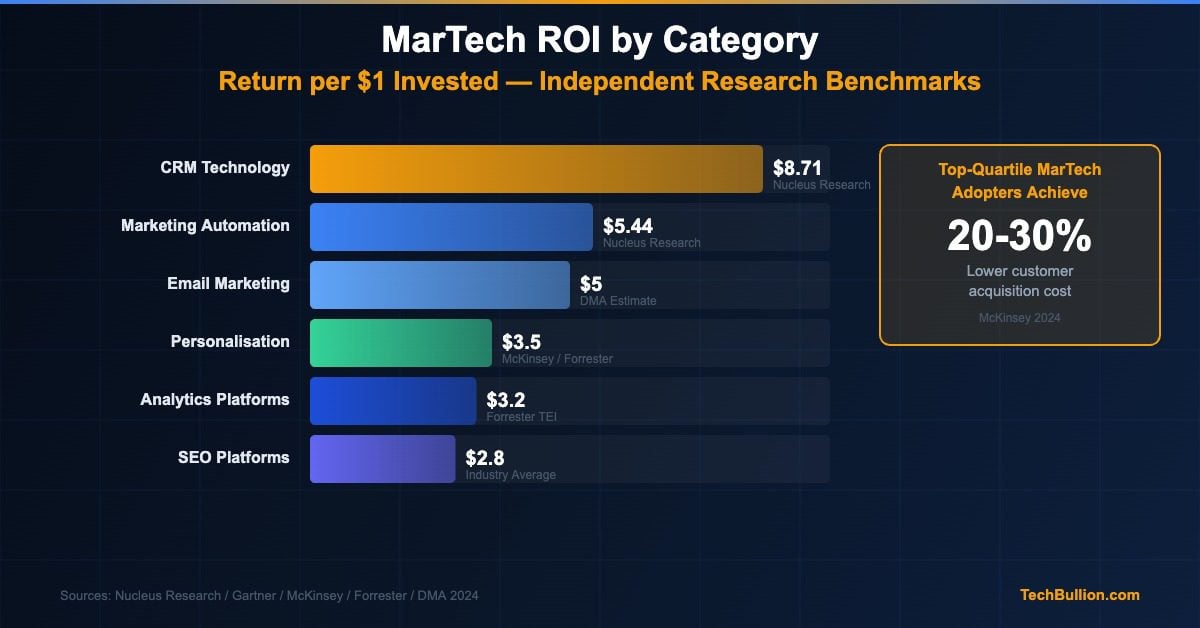
Calculating the return on investment (ROI) for martech tools is a critical step in assessing their value. This involves comparing the costs associated with each tool against the revenue generated from its use. According to HubSpot's 2024 State of Marketing report, companies with a clear understanding of martech ROI are 2.5 times more likely to achieve their revenue goals.
To calculate ROI, marketing leaders should consider both direct and indirect contributions to revenue. Direct contributions might include increased lead conversion rates, while indirect contributions could involve improved customer insights that enhance sales strategies. By quantifying these impacts, companies can make informed decisions about which tools to retain or replace.
Linking Tools to Pipeline Metrics
Linking martech tools to pipeline metrics provides a clearer picture of their impact on revenue. This requires integrating data from various tools to track the customer journey from initial contact to conversion. According to Salesforce, companies that effectively link martech tools to pipeline metrics see a 20% increase in sales productivity.
For example, a company using Salesforce CRM alongside Pardot for lead nurturing can track how these tools influence conversion rates at each stage of the sales funnel. By analyzing this data, marketing leaders can identify bottlenecks and optimize their strategies to enhance pipeline efficiency.
Making Informed Renewal Decisions
Assessing Vendor Performance
When it comes time to renew contracts with martech vendors, assessing vendor performance is crucial. This involves evaluating the vendor's support services, product updates, and overall alignment with the company's strategic goals. According to a study by IDC, 70% of companies consider vendor support a key factor in renewal decisions.
Real-world examples illustrate the importance of vendor performance. For instance, when LinkedIn decided to renew its contract with Salesforce, it cited Salesforce's continuous innovation and customer support as critical factors. Such considerations ensure that the company remains competitive and responsive to market changes.
Negotiating Better Terms
Negotiating better terms with vendors can lead to significant cost savings and enhanced service levels. This requires a thorough understanding of the company's needs and the vendor's offerings. According to Forrester, companies that engage in proactive vendor negotiations can achieve up to 15% cost reductions.
Marketing leaders should leverage data from their martech audits to support negotiations. By presenting evidence of tool performance and alignment with strategic goals, they can secure more favorable terms, such as reduced pricing or enhanced service packages.
Consolidating the Martech Stack
Benefits of Tool Consolidation
Consolidating the martech stack offers several benefits, including reduced complexity, lower costs, and improved data integration. According to Gartner research, companies that consolidate their martech tools see a 25% improvement in operational efficiency.
For example, a B2B company that consolidates its email marketing and CRM tools into a single platform can streamline data flows and enhance customer insights. This not only improves marketing efficiency but also supports more personalized and effective customer interactions.
Strategies for Effective Consolidation
Effective consolidation requires a strategic approach that considers both current and future needs. Marketing leaders should prioritize tools that offer comprehensive functionalities and seamless integration capabilities. According to a report by McKinsey, companies that adopt a strategic approach to consolidation achieve better alignment between marketing and sales teams.
One strategy is to adopt a modular approach, where companies select a core platform that can be augmented with additional modules as needed. This allows for flexibility and scalability, ensuring that the martech stack can evolve with the company's growth.
Benchmarking Vendors Against Pipeline Impact
Setting Benchmarking Criteria
Benchmarking vendors against pipeline impact involves setting clear criteria for evaluation. These criteria should align with the company's strategic objectives and include metrics such as lead conversion rates, customer acquisition costs, and revenue growth. According to Harvard Business Review, companies that establish clear benchmarking criteria are more successful in achieving their marketing goals.

Marketing leaders should involve cross-functional teams in the benchmarking process to ensure a holistic view of vendor performance. This collaborative approach helps identify areas for improvement and fosters alignment across departments.
Using Benchmarking Data for Decision Making
Once benchmarking data is collected, it should be used to inform decision-making processes. This involves comparing vendor performance against industry standards and identifying gaps in service delivery. According to a study by Deloitte, companies that leverage benchmarking data in decision-making see a 30% improvement in vendor relationships.
For example, a company that benchmarks its martech vendors against industry leaders can identify areas where its tools fall short. This insight can guide future investment decisions, ensuring that the martech stack remains competitive and aligned with business objectives.
```htmlEvaluating Martech Tools Against Revenue Impact
Linking Martech Tools to Revenue Outcomes
To effectively measure the impact of martech tools on revenue, organizations must establish clear connections between tool usage and revenue-generating activities. This involves setting up key performance indicators (KPIs) that align with business objectives. For instance, if a tool is used for lead generation, relevant KPIs might include the number of qualified leads generated, conversion rates, and the cost per lead.
According to a report by HubSpot, companies that align their marketing tools with their sales processes see a 20% increase in revenue. This alignment ensures that tools are not just used for their own sake but are directly contributing to the bottom line. By tracking these KPIs over time, organizations can determine which tools are driving the most value and which may need to be reevaluated or replaced.
Case Study: Adobe's Martech Optimization
Adobe provides a compelling example of how a strategic approach to martech can drive revenue growth. By consolidating their martech stack and focusing on tools that provided the most significant impact on customer engagement, Adobe was able to streamline operations and enhance their data-driven marketing strategies. As a result, Adobe reported a 25% increase in digital marketing efficiency and a significant boost in customer retention rates (Adobe Annual Report, 2022).
Strategies for Effective Martech Vendor Management
Building Strong Vendor Relationships
Effective vendor management goes beyond simply negotiating contracts. It involves building strong, collaborative relationships with vendors to ensure that the tools provided align with the company's strategic goals. A report by Forrester highlights that companies with strong vendor relationships are 33% more likely to achieve their marketing objectives.
To foster these relationships, companies should engage vendors in regular performance reviews and strategic planning sessions. This collaborative approach allows for better customization of tools and services, ensuring that they meet the evolving needs of the business. Additionally, it provides an opportunity to negotiate better terms and explore co-innovation opportunities.
Case Study: Salesforce's Vendor Management Success
Salesforce is renowned for its strategic vendor management practices. By maintaining open lines of communication and involving vendors in their long-term planning, Salesforce has been able to leverage vendor expertise to enhance its product offerings. This approach has led to a 15% reduction in tool-related costs and a 20% improvement in tool utilization rates (Salesforce Investor Relations, 2023).
Implementing a Vendor Scorecard System
One effective strategy for managing martech vendors is implementing a vendor scorecard system. This system evaluates vendors based on predefined criteria such as performance, support quality, and alignment with business goals. According to Gartner, organizations that use vendor scorecards report a 25% improvement in vendor performance and satisfaction.
The scorecard should be updated regularly to reflect changes in vendor performance and business needs. This continuous evaluation process ensures that vendors remain accountable and that the organization can make informed decisions about renewals and future collaborations.
Leveraging Data Integration for Enhanced Decision-Making
The Role of Data Integration in Martech
Data integration is a critical component of effective martech management. By integrating data across various tools, organizations can gain a holistic view of customer interactions and campaign performance. This comprehensive perspective enables more informed decision-making and enhances the ability to attribute revenue to specific marketing activities.
According to a study by McKinsey, companies that effectively integrate data across their martech stack see a 15-20% increase in marketing ROI. This is achieved by eliminating data silos and enabling real-time analytics, which allows for more agile marketing strategies and quicker response to market changes.
Case Study: IBM's Data-Driven Marketing Transformation
IBM's commitment to data integration within its martech stack has been a key driver of its marketing success. By consolidating data from various sources, IBM was able to create a unified customer profile, leading to more personalized marketing efforts. This integration resulted in a 30% increase in campaign effectiveness and a 25% reduction in customer acquisition costs (IBM Marketing Insights Report, 2022).
Best Practices for Data Integration
- Centralize Data Management: Use a centralized platform to manage and integrate data from various martech tools. This reduces complexity and enhances data accuracy.
- Ensure Data Quality: Regularly audit data for accuracy and completeness. High-quality data is essential for reliable analytics and decision-making.
- Invest in Integration Tools: Utilize integration platforms that facilitate seamless data flow between different systems, reducing manual data handling and errors.
Frequently Asked Questions
What is martech tool sprawl?
Martech tool sprawl refers to the accumulation of numerous marketing technology tools within an organization, often leading to inefficiencies and redundancies. This occurs when companies adopt multiple tools for similar functions, resulting in increased complexity and operational costs. Addressing tool sprawl involves auditing the martech stack to identify and eliminate redundant tools, thereby streamlining operations and improving ROI.
How can I measure the ROI of my martech tools?
Measuring the ROI of martech tools involves comparing the costs associated with each tool against the revenue generated from its use. This includes direct contributions, such as increased lead conversion rates, and indirect contributions, such as enhanced customer insights. By quantifying these impacts, companies can assess the value of each tool and make informed decisions about renewals and replacements.
What are the benefits of consolidating the martech stack?
Consolidating the martech stack offers several benefits, including reduced complexity, lower costs, and improved data integration. By streamlining the number of tools, companies can enhance operational efficiency and support more personalized customer interactions. Consolidation also facilitates better alignment between marketing and sales teams, leading to improved collaboration and strategic execution.
How do I benchmark martech vendors?
Benchmarking martech vendors involves setting clear criteria for evaluation, such as lead conversion rates, customer acquisition costs, and revenue growth. This process requires collecting data on vendor performance and comparing it against industry standards. By identifying gaps in service delivery, companies can make informed decisions about vendor renewals and future investments.
What factors should I consider when renewing martech vendor contracts?
When renewing martech vendor contracts, consider factors such as vendor support services, product updates, and alignment with strategic goals. Evaluating vendor performance and negotiating better terms can lead to cost savings and enhanced service levels. Companies should leverage data from martech audits to support renewal decisions and ensure continued alignment with business objectives.
Why is it important to link martech tools to pipeline metrics?
Linking martech tools to pipeline metrics provides a clearer picture of their impact on revenue. By integrating data from various tools, companies can track the customer journey from initial contact to conversion. This analysis helps identify bottlenecks and optimize strategies to enhance pipeline efficiency, ultimately leading to increased sales productivity and revenue growth.
In conclusion, managing a martech stack effectively requires a strategic approach that balances tool selection, performance evaluation, and vendor management. By auditing the martech stack, measuring ROI, and making informed renewal decisions, marketing leaders can streamline operations and enhance their impact on revenue. Consolidating tools and benchmarking vendors against pipeline metrics further supports these efforts, ensuring that the martech stack remains aligned with business objectives and poised for growth.
Key Takeaways
- B2B companies face tool sprawl with over 10,000 martech solutions available.
- Tool sprawl complicates data integration and increases operational costs.
- Regular audits can reduce martech costs by up to 30%.
- Understanding martech ROI helps companies achieve revenue goals more effectively.
Frequently Asked Questions
- What is tool sprawl?
- Tool sprawl occurs when organizations accumulate more tools than they can manage effectively. This leads to fragmented data and increased complexity in marketing operations.
- How can companies audit their martech stack?
- Companies should catalog all existing tools and their functionalities. Collaborating with IT and finance departments helps create a comprehensive inventory.
- Why is measuring ROI important for martech tools?
- Measuring ROI helps assess the value of each tool by comparing costs against revenue generated. Companies with a clear understanding of martech ROI are more likely to achieve their revenue goals.
- What challenges do marketing leaders face with martech tools?
- Marketing leaders face challenges such as tool sprawl, which complicates campaign execution and collaboration. Many report that their martech stack is too complex to manage effectively.
See Where Your Business Stands in Search
Get a free site audit. We identify what is holding you back and what to fix first.
Related Resources
Explore more insights to enhance your digital marketing strategy
Revenue Operations: Connecting Marketing, Sales, and CS Data
How high-performing RevOps teams unify data across the full customer lifecycle to eliminate reporting gaps and drive faster decisions.
Decision Intelligence Platform
Unify attribution, MMM, and incrementality into a single operating view. Route every measurement question to the right instrument automatically.
See It Run on Your Stack
Book a demo to see how RankWorks connects to your CRM, MAP, and ad platforms without adding more complexity to your martech stack.